Why Workspace Ergonomics are Important: My Personal Story
2025-05-09 00:00:00 +0000
Reduced flexibility, stiff muscles, and painful muscle contractions in my neck and back have slowly started reminding me of the neglect. The neglect I rendered by ignoring my workspace ergonomics, and today, I feel like the Tin Man from The Wizard of Oz.
While working efficiently on my laptop was prioritised, I sidelined working in a comfortable and healthy workspace—ergonomics. Had the position of the computer keyboard, mouse, monitor, and chair type been planned, the strain endured by my muscles owing to poor posture could have been avoided or at least reduced.
I am certain that you have read or watched the movie The Wizard of Oz. I remember, at nine years of age, reading the story as I coloured the characters in a unique colouring storybook with delight.
In The Wizard of Oz, a wicked witch is responsible for a woodcutter turning into a Tin Man from a human. Tin Man, a.k.a. Tin Woodman, lives on to rust and loses mobility. Dorothy, the protagonist, restores the Tin Man's mobility with oil, like anything metal.
In my story, however, I am responsible for the 'rusting' of my muscles. Well, I wasn't immobile, but I was definitely compromised. Even lying down to sleep was dreadful, as my neck muscles protested with spasms. Where was my Dorothy?
Muscle Fibrosis: How It Made Me Stiff and Less Flexible
Homes in metropolitan cities like Tokyo and Yokohama in Japan are renowned for being cramped and expensive. Living in small spaces accommodates limited furniture, the best scenario for minimalistic living. With time, I became obsessed (still am) with a sustainable and minimalistic style of living. Ergonomic tables, chairs, and laptop accessories were admired and forgotten as I left IKEA.
Now, I realise that some things cannot be compromised, like an ergonomic workspace.
What is Muscle Fibrosis?
I was diagnosed with muscle fibrosis when I visited a specialist in India. Muscle fibrosis—what's that? We know of the body's muscles. But did you know they have intricate structures called muscle fibres? Muscle fibres are elastic and flexible, like rubber bands. Hence, muscles are bundles of rubber bands (muscle fibres) held together by a protective covering called connective tissue.
Imagine stretching a rubber band and slowly releasing the strain; the rubber band retains its original form. Next, imagine overstretching the rubber band. Thereupon, microtears may occur, allowing overstretching. Doing this repeatedly for a longer duration exerts a strain and gradually snaps the rubber band.
Similarly, our lifestyle, including posture, activities, and exercises, can cause microtears in our muscles. Slouching while using a laptop, for instance, overstretches the muscle fibres in your neck and upper back as you lean forward for a long time, potentially causing microtears.
However, in my case, repeated long-duration slouching behaviours challenged, overused, and overstrained the muscle fibres, resulting in major muscle injuries. But how did this happen in spite of our body having repair mechanisms?
Our body tries and repairs damages when we rest (sleep): the overworked, damaged elastic fibres of our muscles are repaired with new muscle fibres to restore their function—muscle healing. But know that repairs have their shortcomings. For context, tiny tears in rubber bands may be fixed by applying heat or super glue. However, doing so gradually reduces their elasticity, and they can snap under stress.
Likewise, repeated repairs to the microinjuries in the muscle fibres affect their elasticity. Though the damaged muscle fibres are replaced entirely, repeated injuries overwork the healing system, similar to a burnt-out worker.
Muscle Fibrosis: Fibre Replacement Gone Wrong
Initially, the cleaning crew—our immune system’s inflammatory cells—clear the damaged muscle fibres. Once done, the repair crew is notified to begin their work. Like scaffolding—a temporary structure that helps the construction crew with repairs—collagen (you read that right!) is a biological scaffold set at the site of injury. Following the normal course of muscle repair/healing, these biological scaffoldings are broken down and removed.
However, repeated repair demands (from repeated behaviours and injuries) overwhelm the repair crew. Excessive scaffolds are set at the site of injury, hindering the replacement of damaged muscle fibres with new ones. Instead, the cleared-off debris is patched up with scaffold materials, i.e., collagen. This replacement of elastic muscle fibres with non-elastic collagen is a scar.
Yes! The very collagen that makes your skin firm, plump, and youthful, when in the muscles, makes them stiff and less functional. Therefore, fibrosis—specifically, muscle fibrosis—is the replacement of traumatised or injured muscle fibres with connective tissue scars.
Normal course of muscle healing (bonus information below)
Getting to know the crew and their responsibilities
1) The cleaning crew:Neutrophils—a type of white blood cell (WBC)—clear the damaged muscle fibres. Once done, they intimate the other crew members like macrophages—another white blood cell (WBC) type—via a chemical messenger, cytokines.
2) The project manager: Macrophages recruit the repair crew to the site of injury through regulated inflammation. Excessive and prolonged inflammation can disrupt the balanced muscle injury repair.
3) The repair crew: Inflammation (controlled) is the cue for the repair crew to set up the scaffold and for the repairs to begin. Myofibroblasts assemble the biological scaffold—collagen. Once ready, muscle stem cells—satellite cells—begin repairing the injured muscle tissues.
4) Myofibroblasts are taken off-site once the collagen scaffolds serve their purpose.
Making Sense of It All: It’s Not Rocket Science
As an aspiring writer, I slouched over my laptop while working, as if hypnotised by it. I can't imagine the strain my muscles were under as I spent most of my working hours in this posture. Unable to keep up with the demanding repairs, my muscles fibrosed. With muscle fibrosis, the elasticity of my upper back muscles reduced, gradually making me less flexible and stiff like the Tin Man. To help you understand, I put on my socks by bringing my feet closer to my body instead of bending my upper back!
Fibrosed muscles, due to prolonged poor posture and strain, are weak, thereby exerting pressure on the nerves and causing pain.
How Physiotherapy Relieves My Stiff, 'Rusty' Muscles
"Humans are not designed for a sedentary lifestyle involving prolonged sitting."
The specialist had three non-negotiable pointers for me:
- No prolonged sitting: move or stretch every few minutes.
- Manage a good posture: lower back is supported, knees at or above the hip level, and screen at eye level and placed an arm’s length away.
- Physiotherapy
Physiotherapy: The Tin Man in Pain Found her Dorothy
The oil to my 'rusted' muscles was upper-back stretching and strengthening exercises. Unlike the Tin Man, it will take a long time before I regain my muscle flexibility completely. However, I can feel the difference already—I can bend to put on my socks.
Customised stretching exercises recommended by my physiotherapist work their magic by reducing the accumulated collagen in the muscles. Visualise slowly removing a rushed 'collagen' patch-up job for proper repair.
Also, the inflammation (swelling) at the site of muscle fibrosis is reduced, allowing the muscles to regenerate or heal. Furthermore, the pressure on the nerves is relieved, alleviating pain.
Workspace Ergonomics and Exercise: A Lifelong Effort
When work demands that we push ourselves, always prioritise your health. An ergonomic workplace with good posture, productive breaks with exercise (especially when working on a laptop), and commitment to customised home exercises that target specific muscles can help prevent muscle fibrosis.
If you are someone who spends too much time on your laptop, how do you make yourself comfortable? If you have any additional tips, leave a comment; I would love to read them and see how I can fit them into my schedule.
References
Cholok, D., Lee, E., Lisiecki, J., Agarwal, S., Loder, S., Ranganathan, K., Qureshi, A. T., Davis, T. A., & Levi, B. (2017). Traumatic muscle fibrosis: From pathway to prevention. The Journal of Trauma and Acute Care Surgery, 82(1), 174–184.
How Your Immune System Battles Influenza Reinfection: A Narrative
TOP READER COMMENTS
Shivani: Another article that I thoroughly enjoyed reading! I love how detailed it is and yet dumbed down enough for me to not get bored. This came at the right time for me to start paying attention to my posture too. Looking forward to reading more!
Colleen: Great post and so relatable to many of us working desk jobs! I have been working to increase exercise and soft tissue work to help counter what happens to my body when sitting at a desk most of the day. The struggle is real. I like how you broke it down and gave good suggestions to improve!
Charli Dee: Hi! This was a really interesting and informative post! You really did your research! I really like that because the more you look into what happening to you the more you understand yourself and how to fix the problem. Its not easy to fix the issue, but I respect that you seem to be working hard. I need to make adjustments for my health too. A sedentary lifestyle is definitely not a healthy one. As a blogger and writer I’m always in front of a screen and I’ve been gaining a lot of weight. I’ve been trying to move around more myself. Thankyou for sharing!
How Is Body Fat Symmetrically Distributed in the Human Body?
2024-07-24 00:00:00 +0000
'Graduating with a doctoral degree (PhD) is easier than gaining weight', I confessed to my research supervisor at twenty-seven. Despite being lively and healthy, my slender stature was a concern for everyone except my doctors, parents, and me.
Encounters made for the first time (with total strangers!) would be 'humble' unsolicited tips (free of charge) on how to gain weight. Through this ordeal, my 'well-wishers' failed to understand how I could feast without worrying about adding a few points to the scale.
At thirty, this body naturally gained 10 kilograms (22.05 lbs). Yet, according to the Body Mass Index (BMI) for Indian populations, I am still underweight! Undeterred by this finding, I remain confident. Read more on why BMI has limitations.
Still getting used to fitting perfectly into my previously baggy clothes, I noticed one day that my left leg felt more tightly squeezed into my 'skinny' jeans than my right. My partner reassured me that my left leg wasn't swollen (as presumed by me) and looked exactly like my right.
Have you ever wondered how you are so symmetrical? How does all that extra weight gained as fat accumulate proportionally on both our left and right sides? While several articles online tackle the first question, almost none address the second.
Don't you think there must be some factor controlling 'symmetrical' fat distribution? If not, we would have blobs of healthy fat accumulating in all the wrong places, making us look like the 'Bacteria Monster' from the cartoon SwatKats (nostalgia for millennials?)
In this article, I address How body fat is distributed symmetrically.
Getting Started
What Does Symmetry Mean in Human Beings?
Humans are bilaterally symmetrical. Imagine you have clay moulded into a human figure. You draw a line down the middle of its body, from the top of its head to the tips of its toes. You cut the human mould along the line drawn into two halves. The left half mirrors the right half, hence bilaterally symmetrical.
Bilateral symmetry of the human body
Where is Body Fat Stored in the Human Body?
Say your caretaker packed you a box of sweets in case you get hungry or need an energy boost. When you want to re-energise, what would you do? You would go for the food reserve, those sweets in the box.
Similarly, the human body has energy reserves. Fat is stored within box-like, specialised cells called adipose cells or adipocytes. These fat cells are present in various body parts: under the skin (subcutaneous), between muscles, surrounding organs (including the heart), in the abdomen, thighs, upper arms and buttocks.
How adipocytes store energy: an analogy-based understanding of human fat cells
Did You Know? Interesting Facts on Energy Reserves
1) The largest energy reserves are the subcutaneous adipose tissue (a collection of cells).
2) The amount and distribution of the subcutaneous adipose tissue determine the body's shape.
Factors that Determine the Location and Pattern for Fat Distribution
Do you agree that the overall body fat distribution or accumulation pattern is visually different in a man from a woman? What causes this difference in fat distribution?
Did You Know? Surprising Facts About Fat Accumulation
1) A woman accumulates more fat subcutaneously (under the skin) in the upper arms, hips, thighs and buttocks. This pattern of fat accumulation is termed the peripheral fat distribution.
2) A man accumulates more fat viscerally or in the abdomen.
Age and Sex Hormones: Their Role in Fat Distribution
Estrogen and testosterone are sex hormones present in both males and females. Yes! Both these sex hormones are in you. However, the proportion shall vary. If you are a female, you have more estrogen (primary sex hormone) than testosterone. If you are a male, you have more testosterone (primary sex hormone) than estrogen.
How Does Estrogen Affect Body Fat Distribution?
Imagine you have a box full of sweets. However, the box is locked. You cannot open the box without the key. With the box closed, you cannot access the stored sweets inside to re-energise yourself. In this analogy, the 'box' is the adipocyte, the 'sweets in the box' is the accumulated fat in the adipocyte, the 'key' is the estrogen and the 'key-hole' is the estrogen receptor (estrogen binds to it).
Now, a tricky situation: You are low on energy, have the key, and want to savour the sweets. However, there are multiple boxes, and not all boxes open with the key you have. You can eat sweets only from those boxes that open with the key. The more the boxes opened, the lesser the overall sweets retained.
With the analogy explained, here's how estrogen manages body fat distribution. The number of estrogen receptors (ERα) influences estrogen's access to adipocytes (fat cells) with accumulated fat and its breakdown. In women, fatty tissues in the abdomen region have higher ERα receptors. On the other hand, lower in the thigh and buttock regions. With lower ERα receptors, estrogen cannot access the fat for metabolism, leaving the fat accumulated in the fatty tissues.
Did You Know? Affected Estrogen Levels Alter Fat Distribution Pattern
1) In women with polycystic ovarian syndrome (PCOS) and postmenopausal women (period has stopped permanently), due to affected estrogen levels (lower levels), the fat accumulation or distribution patterns are similar to that in men.
2) More abdominal fat accumulation. The access (open) to the fat-accumulated adipose tissues is lower due to low estrogen levels (though the ERα receptors are higher).
How Does Testosterone Affect Body Fat Distribution?
Think of testosterone as the caretaker who packs your lunch (in a box) in the right proportion. However, in the absence of the caretaker, the lunch packed is always in excess (is it not?).
Similarly, testosterone controls the fat packing (fat accumulation) in the adipocytes (box-like cells) and breaks down fat through testosterone receptors. Due to lower testosterone receptors in the abdominal adipocytes, the influence of testosterone is lower in the abdominal region than in the thighs (higher testosterone receptors).
Did You Know? Altered Testosterone Levels Affect Fat Accumulation Pattern
1) Women with PCOS have higher testosterone. They exhibit a male fat distribution pattern.
2) Men in their lowest testosterone levels (after 70 years) have excess abdominal fat accumulation.
Sex hormones, receptors, and their impact on fat distribution patterns
So far, the active roles of estrogen and testosterone in regulating fat accumulation in specific body regions in women and men through receptor-induced metabolism have been explained.
How is Fat Distributed Symmetrically on Both Sides of the Body?
To answer this question, one must understand how humans are bilaterally symmetrical. Just like a building layout is planned into a blueprint, the body layout of an organism is determined by a genetic blueprint. Also, just like an engineer oversees the execution of the plan, specific genes (HOX genes) direct the body plan.
During embryo development, HOX gene proteins (like a controller) regulate the expression of other genes that form specific structures (body parts). By switching genes on (genes expressed) and off in a developing embryo, HOX gene proteins control the development of tissues and organs in the correct location and orientation, contributing to bilateral symmetry. Learn more about homeotic genes and body patterns.
HOX genes, the key regulators of bilaterally symmetrical body plans — an analogy
With the role of HOX genes understood, let's explore why your left leg is an exact mirror image of your right. Why is one leg or arm not bulkier than the other? For fat to be distributed symmetrically, the storehouse of fat, the adipose tissues or adipocytes, has to be distributed and positioned symmetrically.
Imagine a person assigned the task of arranging boxes within the outline of a human figure. The person places each box in a pattern that perfectly mirrors both sides. These boxes would later be filled with sweets. Let us relate to the analogy. HOX gene is the 'person', the fat tissue is the 'box', and fat is the 'sweet'.
As mentioned earlier, the HOX gene is a developmental gene that controls the development of tissues and organs in a developing embryo while maintaining a bilaterally symmetric body plan. The same gene (HOX gene) meticulously orchestrates the developmental pattern of 'box-like' adipocytes (adipose tissue) for a symmetrical fat distribution on both sides of the body.
HOX genes regulate a symmetrical developmental pattern of fat tissues — an analogy
Recap: Bilateral Symmetry in Fat Accumulation
As a developing embryo, my HOX genes meticulously orchestrated the expression of genes to create a bilaterally symmetrical body, including my legs. The same genes also regulated the development of fat tissues in specific locations, ensuring that fat would be deposited symmetrically on both the left and right sides of my body.
The mystery is solved if you are still wondering why my left leg felt more tightly squeezed into my skinny jeans than my right. Two words, and that is manufacturing defect.
Have you ever wondered how your body maintains its symmetry? How much did you know about fat distribution patterns? What did you think of this article? Leave a comment below to let me know! If you enjoyed this article, please share it on your social media. The more readers, the better the dissemination of information and the greater the motivation for me to keep writing!
References
Ahn, J., Wu, H., & Lee, K. (2019). Integrative analysis revealing human adipose-specific genes and consolidating obesity loci. Scientific Reports, 9(1), 3087.
Frank, A. P., de Souza Santos, R., Palmer, B. F., & Clegg, D. J. (2019). Determinants of body fat distribution in humans may provide insight about obesity-related health risks. Journal of lipid research, 60(10), 1710–1719.
Yuhasz, M. S. (1982). Body fat patterning of the subcutaneous adipose tissue. Anthropologiai Közlemények- Anthropological Communications, 26(1-2), 163-173.
You May Also Like Our Articles on Molecular Biology:
How do genes 'paint' animal coats with colours and patterns?
TOP READER COMMENTS
Smitha Hegde: Smruthi has a talent to make complex concepts in short stories. I found the article engaging and crisp. The flow was smooth and the illustrations cute and clear. Waiting for the next one.
Guest reader 1: I love the way you explain complex things in a simple way, especially for someone who has virtually no knowledge of medicine or the human body. I particularly liked the picture of the sweets in the box. I now know how fat is symmetrically distributed in our bodies. Thank you for sharing this informative article.
Guest reader 2: Wow! This was such a great and informative read. I've honestly never thought about this too much before, but now that I've read this, I find it SO interesting! Our bodies are amazing. Thank you for taking such a complex topic and breaking it down in a way to easily understand.
Pigmented Cotton: Eco-Friendly and Sustainable Solution to Textile Industry Pollution
2024-06-04 00:00:00 +0000
Lately, pastel colours appeal to me. They are elegant and have a relaxing effect. In contrast, white feels boring and fails to evoke the lively 'vibes' I crave. A couple of weeks before writing this blog post, I was staring out the balcony door of our house, following the 20-20-20 rule to rest my eyes. A white bath towel hung to dry obstructed my view, and, as usual, a wave of thoughts and questions hit me. 'Monotonous and dull' teased my brain. The questions tumbled in only later.
Reflecting on 2015, as a 23-year-old research scholar reviewing scientific articles, I learned that textile industries are significant polluters worldwide. The environmental impact is substantial. Even as I write today, I realise how I inadvertently contribute to this pollution as a consumer.
The synthetic dyes used to colour the textiles vibrant and the chemicals to fix them to the textile fibres are laden with heavy metals. These heavy metals make their way into the environment through unscientifically discarded effluents, thus polluting them.
My Encounter with Naturally Pigmented Cotton
While my brain was in 'popcorn mode' during this 20-20-20 rule break (beyond 20 seconds now!), I pondered if naturally pigmented cotton could be a sustainable solution. No! I was not considering natural or vegetable fabric dyes because they bind poorly to the fabrics, necessitating fixants laden with heavy metals.
The naturally pigmented cotton has fibres with inherent pigments. Like flowers coloured due to pigments, the cotton fibres in the cotton plant seeds have pigments, rendering coloured cotton.
Within minutes, I was researching 'pigmented cotton', all triggered by a mediocre white bath towel. I was elated yet baffled at getting several hits to 'pigmented cotton' on search engines. I had always seen cotton with shades of brown and white, so discovering that cotton can be naturally pigmented in shades of green, red, and blue was a delightful surprise.
Tracing the Historical Footprint of Naturally Pigmented Cotton
Historical evidence suggests the cultivation and use of naturally pigmented cotton in the Americas by its indigenous tribes. Specifically, the Mochica Indians of Peru have been credited with growing and maintaining pigmented cotton for two thousand years! Documents have also recorded a brief use of naturally pigmented cotton during World War II owing to the dye scarcity. However, it was ditched soon after.
Pigmented Cotton, Not So Alluring?
I was astounded when I discovered this information. Why did we ever resort to the commercially available white cotton fibre types when we had a sustainable option all along—naturally pigmented cotton? The reason for sparse attention and awareness of naturally pigmented cotton is its limited commercial value.
Imagine trying to plait short hair into a single, neat braid. It's quite a challenge, isn't it? Similarly, the short fibre length of naturally pigmented cotton makes it difficult to spin them into threads on a commercial scale. Moreover, the low quality and fibre yield do not position naturally pigmented cotton as the ideal sustainable alternative.
Tweaking Genetics to Enhance Naturally Pigmented Cotton
Research is imminent with the rising demand for sustainable and eco-friendly alternatives to conventional white cotton. Selective breeding and genetic engineering techniques are the solutions to the limitations. However, customer acceptance of these solutions is the key to successful commercialisation. Let me simplify the techniques to help appreciate how the quality of naturally pigmented cotton can be improved.
The Good Old Selective Breeding Method
Breeding is a term familiar to all of us. It's all about mating 'selected' individuals to obtain a hybrid (offspring) with desired characteristics. The white cotton we know and commonly see is a product of selective breeding.
Long ago, wild cotton parents with desired characteristics were hybridised—a technique in selective breeding—to develop the commercial cotton species we have today. Perhaps a wild parent with long, strong cotton fibre hybridised with a wild parent with a larger seed-bearing high cotton yield. However, the process is not straightforward. Genetics works on permutations and combinations, making selective breeding an ongoing process that involves trial and error to achieve the desired characteristics.
Picture this: you want a unique shade of red for a painting. You can get this shade by blending the colours white and red. You may need to mix the resulting shades with more white or red. It takes several 'trials' to get the perfect shade. Similarly, obtaining the expected hybrid of naturally pigmented cotton that is commercially viable takes several 'generations' of breeding!
Selective breeding explained: enhancing traits for pigmented cotton
Genetic Engineering: The Faster Approach?
During my moment of contemplation, I mulled genetic engineering as the approach to obtaining commercially viable, naturally pigmented cotton. I can imagine a few critics of Genetically Modified Organisms (GMOs) rolling their eyes at this idea. I am not going to advocate the GMOs in this post. After all, genetically modified crops are one of the solutions for sustainable agriculture.
Genetic engineering is the introduction of specific genes responsible for desired characteristics into an organism of interest. Think of yeast 'introduced' to a batter. Yeast makes the dough rise and improves its texture for good. Similarly, the addition of a desired characteristic-determining gene improves crop quality. Just as the yeast needs the right conditions to function, the introduced genes need a conducive cellular environment to express and produce the desired outcome.
To obtain naturally pigmented cotton, genes for enzymes responsible for pigment production are introduced into the cotton plant. These genes are selected from other naturally coloured plants. When the 'selected' genes integrate with the genetic material of the cotton cell, the cell is termed 'transformed'. With the marvels of technology, a complete cotton plant can be generated from each of these transformed cells. These cotton plants are said to be genetically modified to produce the desired pigmented cotton fibres.
Step-by-step guide to genetically modifying cotton for blue pigment production: from gene identification to blue cotton
Over the years, several techniques have evolved and are used in tandem to obtain the desired pigmented cotton plants. A palette of naturally pigmented cotton can be developed through selective breeding, genetic engineering, and other approaches. Additionally, while pre-harvest conditions like climate and soil type influence pigment development and its intensity, post-harvest practices play a crucial role in maintaining the pigment of naturally coloured cotton.
What Makes the Pigmented Cotton an Environmentally Sustainable Alternative?
Pigmented cotton eliminates the need for the dyeing process, promising water and energy preservation and lower production costs. What's incredible is that the very pigment responsible for the colouration of cotton fibres also provides pest-resistant properties, potentially eradicating the need for pesticides.
While pastel colours appeal to me, many love brighter hues. Research on fabrics made with pigmented cotton shows that their colour slightly darkens with each care cycle, contrasting with the fading of regular textiles. Additionally, the flame resistance, water repellency, ultraviolet protection, and antibacterial properties of naturally pigmented cotton only make it an attractive choice for diverse applications.
With the possibility of various shades of coloured cotton fibres and an extended fabric lifespan, naturally pigmented cotton in textiles could be everybody's pick, making it an environmentally sustainable alternative.
It's said, 'With knowledge comes great responsibility'. Knowledge passed down over centuries, blended with modern science, has paved the way to utilise these once fragile and short coloured cotton fibres efficiently. Now, textile producers and consumers are responsible for embracing these sustainable alternatives for a safe and healthy environment.
If you found this post interesting, share it with others who might appreciate learning about naturally pigmented cotton's environmental benefits and versatile applications. Let's spread awareness and make informed choices for a greener future together!
References
Günaydin, G. K., Avinc, O., Palamutcu, S., Yavas, A., & Soydan, A. S. (2019). Naturally colored organic cotton and naturally colored cotton fiber production. Organic Cotton: Is it a Sustainable Solution?, 81-99.
You May Also Like Our Related Articles on Sustainability:
How does the 'ladder' plant (Pteris vittata) decontaminate water?
Microbial Bioplastics: A Sustainable Alternative to Conventional Plastics?
TOP READER COMMENTS
Sulakshana Karkala: This was such an interesting read! It never even occured to me that naturally pigmented cotton exists. I wonder if we can obtain the different colors including bright hues of pink, with the natural/genetically manipulated strains. That would be a wonder to see!
Mow Debnath: A well-researched, comprehensive blog article. Ty for sharing :)
Guest reader: Well written. I never heard about colored, pigmented cotton. Why naturally available cotton can not be directly used... very interesting
Microbial Bioplastics: A Sustainable Alternative to Conventional Plastics?
2024-03-22 00:00:00 +0000
'Plastic pollution' is neither a new phenomenon nor a difficult concept to grasp. Today, even unborn babies could be exposed to micro-forms of plastics! I am not kidding! In 2020, the first evidence of microplastics in six human placentas was reported. In 2022, researchers announced the presence of microplastics in human breast milk, causing widespread concern worldwide.
From the vast expanse of the 'Great Pacific Garbage Patch' (recognised in the late 20th century) to the microplastics in the remote and pristine Antarctic islands, from the plastics in the majestic beasts to the microplastics in human bloodstreams, plastics have spared no life and left no corner of the earth untouched since its invention in 1907.
Why Are Plastics So Popular and Widely Used?
What would you answer if asked, 'What makes plastic popular?' As a consumer, would you state the prevalent four: a cost-effective alternative (cheap!), versatile (adaptable), durable (long-lasting!), and water resistant.
I relate to it because I am a consumer as well. However, a conscious one! Nevertheless, an engineer would highlight a plastic's wide-ranging properties, including but not limited to versatility, durability, insulation, lightweight, processing ease, and chemical resistance, making them suitable for various applications.
Can Plastics Be Replaced to Reduce Pollution?
Since its invention, plastics have substituted wood, glass, metal, rubber, paper, cardboard, ceramics, and leather in various industries worldwide. Given this extensive usage, can plastic be replaced to mitigate pollution and advance sustainability? The answer lies somewhere between a no and yes.
Plastic pollution can be mitigated by strictly adhering to the widely known three Rs: reduce, reuse and recycle. However, its success hinges on the willingness and responsibility of the consumers.
I refrain from presenting any statistics on plastic recycling for three reasons. One, most of the recycling data is outdated or country specific. Secondly, the assessment is flawed at many levels and does not provide a precise estimate. Third, it is not within the scope of this blog post.
Nonetheless, it is apparent that plastic recycling still has a long way to go. In many cases, cheaper production costs, lack of infrastructure, and the complexity of plastic types have resulted in lower recycling rates. A well-established recycling infrastructure and policies could help achieve adequate plastic recycling and mitigate pollution.
From a sustainability standpoint, plastics are primarily derived from non-renewable sources like petroleum through polymerisation, which renders them unsustainable. The prevalent properties that make plastics desirable also contribute to their lack of biodegradability*.
Bioplastics: A Promising Replacement for Plastics?
Natural elements such as heat, UV radiation, moisture, and oxygen can degrade plastic. They typically transform into microplastics (particles smaller than 5 mm) and nano plastics (particles smaller than 0.1 μm), posing significant risks to health and the environment. Therefore, can plastics be derived from renewable* sources?
Absolutely! Plastics can be derived from renewable, biological sources, known as 'bioplastics'. Did you know that in the 19th century, scientists experimented with natural polymers like cellulose and rubber as animal-derived material' (ivory, horns, tortoiseshell) substitutes? In 1862, the first bioplastic was generated from cellulose! Since then, several biological materials have been investigated for bioplastic formulation, persisting as an alternative even after the advent of synthetic plastics.
Great! So, bioplastics are a sustainable alternative as they are developed from renewable sources (such as plants and algae) and are biodegradable, are they not? No, not entirely! Bioplastics are either only 'bio-based' or 'bio-based and biodegradable'!
What Are Bio-based Bioplastics?
Bio-based bioplastics are made of polymers* derived from renewable biological sources (such as sugarcane or corn starch), entirely or partially. Bio-based polymers could be modified further to match the traditional synthetic plastics, structurally and property-wise.
However, like their synthetic counterparts, structurally modified bio-based plastics do not readily biodegrade in the natural environment. Despite this, they offer advantages over fossil fuel-derived plastics by reducing reliance on non-renewable resources and lowering carbon emissions.
Coca-Cola Ventures into Plant-based Bioplastics
In 2015, Coca-Cola unveiled its prototype for a 100 % plant-based bottle. Coca-Cola has explored bottle options from B-PET (Bio-Polyethylene Terephthalate) to bPx (Bio-based Polyesters) crafted from bio-based polymers derived from sugarcane molasses and corn sugar.
It is worth noting that while these bottles are derived from plant-based materials, they are not biodegradable.
Are There Any Biodegradable Bioplastics?
Indeed, the bio-based plastics manufactured using chitosan, starch, lignin or cellulose polymers are biodegradable. Since the 1990s, starch-based bioplastics from crops such as corn, wheat, or potatoes and Polylactic acids (PLA) from corn starch or sugar cane have gained popularity due to their biodegradability and versatility.
An animated infographic depicting the production of bioplastic
Microorganisms Produce Polymers for Biodegradable Plastics
Did you know that bioplastic polymers can be obtained from microorganisms? These microscopic organisms never cease to amaze us! Hence, the research on microbial-based, biodegradable-bioplastic polymers gained momentum as early as the 1970s.
Microorganisms have proven their ability to produce bioplastic polymers, polyhydroxyalkanoates (PHA) or polyhydroxybutyrate (PHB). But when and why do these microscopic wonders synthesise and store these bioplastic polymers?
Exploring Microbial Bioplastics: Beyond PHA
Bacterial species are known for producing not only PHAs but also PLA. In addition to polyhydroxybutyrate (PHB), bacteria are capable of producing other bioplastic polymers such as poly(3-hydroxybutyrate) (P(3HB)) and polyhydroxybutyrate-co-valerate (PHBV).
Why Microorganisms Produce These Polymers
Microorganisms such as bacteria require the right proportion of nutrients for their growth, i.e., to increase in size and number. When the carbon provided is surplus, and oxygen, nitrogen or phosphates are scarce, the microbes are stressed due to the unmet nutrient requirement.
The natural response of any organism in a stressful condition is to adapt and protect itself. Similarly, the stressed bacteria combat the situation by converting the excess carbon source to PHA polymers through metabolic pathways. The synthesised PHAs are stored within the bacterial cells as their carbon and energy reserve.
An animated infographic describing the conditions required by the bacteria to synthesise the bioplastic polymers
Microbial Bioplastics: How They Are Made
PHAs produced by the stressed microbes are categorised by their length. The most commonly studied form of PHA polymer, PHB (short-chain category), has properties similar to traditional synthetic polymer, polypropylene. However, these polymeric reserves are present within the cell. How are they removed to be used as polymers for bioplastics?
Primarily, the growth of the selected PHA-producing microorganism is facilitated in large vessels called 'fermentors'. Fermentors are a 'growing haven' for microorganisms. In these stainless-steel vessels, specific conditions such as temperature, pH level, oxygen supply, and nutrient availability are regulated to support optimal microbial growth.
Furthermore, for the microbial synthesis of PHA, scientists meticulously study and maintain conditions that encourage PHA production. This includes fine-tuning factors like temperature, pH balance, and nutrient levels to stimulate the desired metabolic pathways within the microorganisms, leading to efficient PHA synthesis.
For a sustainable and cost-effective approach, agricultural waste and by-products, starch and starchy wastewater, and effluents from oil and paper mills are utilised as the carbon-rich feed for fermentation. These diverse carbon sources and additional nutrients fuel the growth of microbial cells capable of producing PHA polymers.
After fermentation, these microbial cells are harvested.* Once harvested, PHA polymers produced within the microbial cells are extracted by breaking open the cells. No need to fret! These bacterial cells have a short lifespan and are to perish within a few hours.
The extracted PHA polymers mix in the soup of cell debris and other impurities. Using a suitable solvent* that dissolves PHA, the polymer is separated from insoluble cellular debris. Finally, the PHA polymers are recovered from the solvent and refined into a powder, pellet, or film that can then be converted into a bioplastic product.
An animated infographic illustrating microbial PHA production (3) and its downstream process (4)
Making Bioplastic Production Cost-effective and Scalable
Presently, scientists contemplate employing genetically engineered microorganisms and inexpensive carbons to make biopolymer production cost-effective and scalable. Genetic alterations result in bigger microbial cells that can produce and store bioplastic polymers in maximum quantities.
Also, efforts are ongoing to develop improved bacterial strains to refine extracellular* PHA production technologies for industrial applications.
Microbial Bioplastic Manufacturing: Current Status and Applications
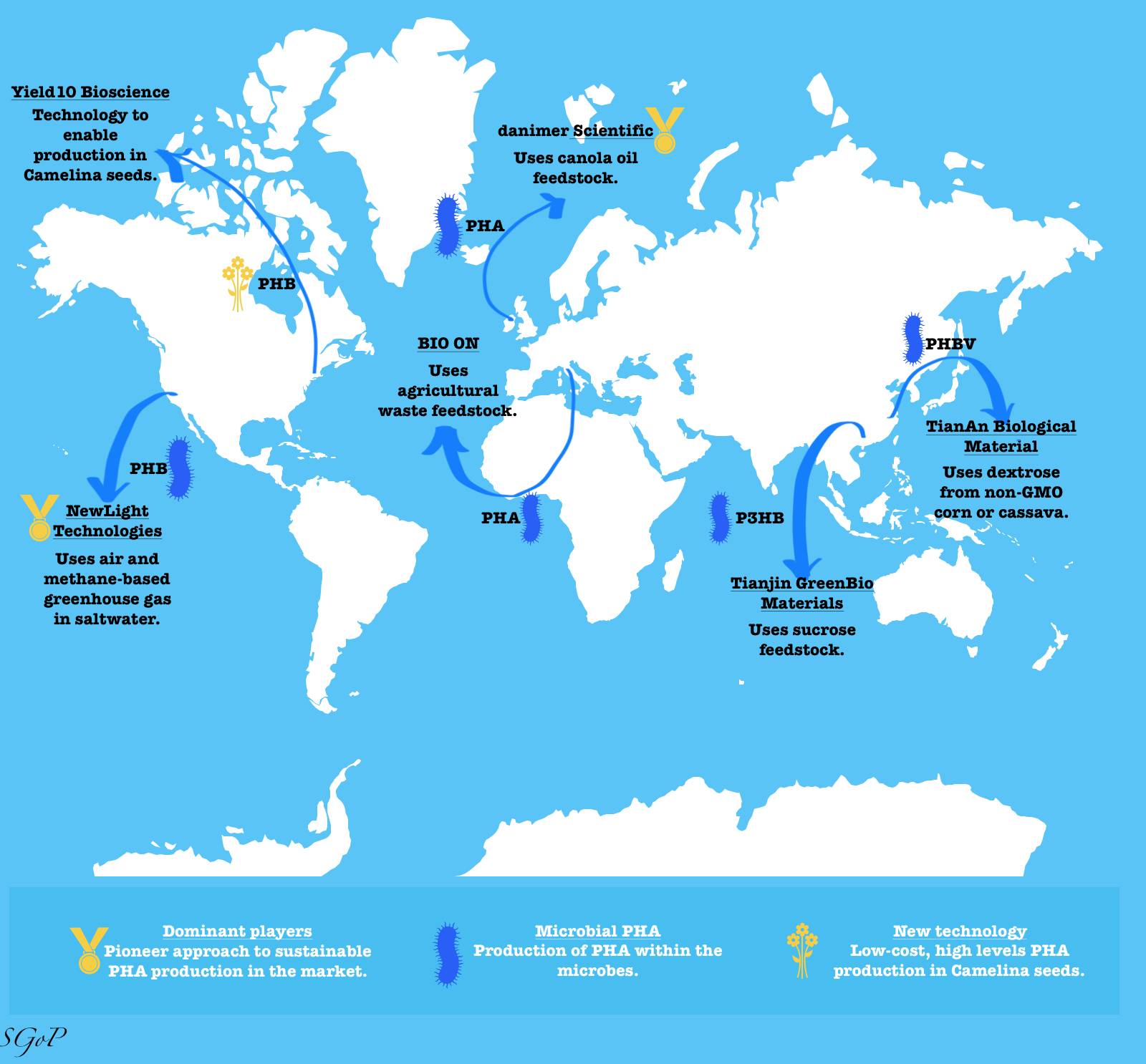
Top Players in Microbial Bioplastic Manufacturing
Even after decades, the research on microbial bioplastics is escalating to enhance bioplastic polymer production. Today, a few biotechnology companies are pioneering technologies that promote sustainable and eco-friendly PHA production.
PHA is gaining traction as an attractive alternative to synthetic polymers. However, I was curious to explore if the transition of the PHA polymers to bioplastic products has been fruitful in the markets.
I was delighted to see the application of PHA in packaging and food services, biomedical, agriculture (weed-suppressing mulch films), fibre materials, and paper coatings.
However, the range of products developed by one particular company is outstanding. Bio-on has devised products independently or through converters* using Minerv-PHA, the brand name of the PHA manufactured by the company.
For the benefit of the readers, this company has made several PHA-based products: food packaging materials, cosmetics (sunscreen and micro-beads), sustainable toys, furniture, pharmaceutical capsules, and fashion fabrics and yarns that are 100 % bio-based and biodegradable.
Plastics from renewable and non-renewable sources that are biodegradable or non-biodegradable
Are you pondering why conventional synthetic plastics are still being manufactured and used when promising alternatives are available?
The answer is multifold: First, the infrastructure for producing synthetic plastics and its supply chain is well-developed.
Secondly, the production costs involved with conventional synthetic plastics are cheaper due to the production scale and cheaper raw materials.
Third, there is a widespread preference for affordable and convenient synthetic plastic products over sustainable alternatives.
In retrospect, bioplastic production is catching up. Although starch-based bioplastics account for most biodegradable bioplastic manufacturing, global microbial bioplastic production is rising.
Continuous research on improved microbial strains and manufacturing technology has resulted in scalable, cost-effective PHA production.
Although it may not be possible to replace all the products that employ conventional plastics, it is the need of the hour to replace single-use synthetic plastics, especially food packaging.
Though recyclable, most often, owing to the greasy nature of these plastics contaminated with food residue or oils, they are unfit for recycling.
Most often, these plastics are subjected to incineration or landfilling. With biodegradable PHA bioplastics, home or industrial composting can degrade them into water, carbon dioxide and compost with the aid of tiny helpers, the microbes.
Do you think microbial bioplastics are safe alternatives to the conventional plastics? Share your thoughts in the comment box below.
*Concepts made simple
Biodegradable = The ability of a substance to be naturally broken down to its simpler forms, in addition to carbon dioxide and water. Microorganisms (bacteria, fungi) and other living organisms are the major contributors to the process
Converter = A company specialising in modifying or combining raw materials to create products
Extracellular = Outside the cell
Harvest = The separation of the cells by centrifugation, filtration, or sedimentation
Polymers = A substance comprising of repeating subunits (monomers)
Renewable = Naturally replenished or continuously available within a short duration
Solvent extraction = Chemicals such as chloroform, methylene chloride or propylene chloride that can dissolve PHA polymers
References
Bioplastics and chemical recycling news monitoring. (n.d.). Bioplastics News. Retrieved March 12, 2024, from https://bioplasticsnews.com/
Costa, A. F., Encarnação, T., Tavares, R. A., Bom, T. T., & Mateus, A. (2023). Bioplastics: Innovation for green transition. Polymers, 15(3), 517. https://doi.org/10.3390/polym15030517
Varghese, S., Dhanraj, N. D., Rebello, S., Sindhu, R., Binod, P., Pandey, A., Jisha, M. S., & Awasthi, M. K. (2022). Leads and hurdles to sustainable microbial bioplastic production. Chemosphere, 305, 135390. https://doi.org/10.1016/j.chemosphere.2022.135390
You May Also Like Our Related Articles on Sustainability:
How does the 'ladder' plant (Pteris vittata) decontaminate water?
Pigmented cotton, an eco-friendly and sustainable solution
The Autumn that Wasn't: The Changing Colours of the Deciduous
2024-02-07 00:00:00 +0000
As I strolled along a boulevard lined with temperate deciduous Ginkgo trees (Ginkgo biloba) in Hiyoshi, Japan, in December of 2023, I was astounded by the beauty of the foliage. The vibrant yellow leaves transformed into a mesmerising display as the setting sun bathed them in its golden rays.
Such a picturesque sight naturally called for photography! As I posed to capture the moment, a wave of doubt washed over me. To begin with, I wondered if I had ignored the nuanced cues of 'autumn' in the tropical city of Mangaluru, Karnataka, India, for three decades!?
Readers familiar with South India may raise questions about my doubt, stating that the region traditionally acknowledges three seasons: summer, monsoon, and winter. I know! But, we have 'winter' in South India even though many coastal cities, including Mangaluru, do not have a pronounced winter. So why not have 'autumn', I wondered? I confess! I was confused by the traditional characteristics associated with 'autumn'.
What characteristics am I talking about!? Autumn is characterised by shorter photoperiods (shorter days and longer nights), a gradual decline in temperature marked by cooler mornings and evenings, crisp air, decreased humidity, and the transformation of leaves on deciduous trees into hues of yellow, orange, or red before shedding*.
Tropical climates like that in Mangaluru do not exhibit a significant temperature change from the rainy season to winter. However, other autumnal characteristics, including the shedding of leaves by deciduous trees, remain apparent. Hence, I assumed the subtle transition period after monsoon to be an autumn-like phase.
Evergreen trees/forests dominate Southern and Western India, creating a landscape where synchronised leaf shedding, a characteristic observed in deciduous trees/forests of Central and Northern India, may not be as prevalent. However, deciduous, and semi-deciduous species still thrive in South Indian landscapes.
The Teak tree (Tectona Grandis), Gulmohar (Delonix regia), and Rain tree (Albizia saman) are deciduous trees commonly found in South India. If you pay close attention, the leaves of these tree species transform in colour and are shed shortly after the rainy season.
After conducting a comprehensive literature review, I came to the realisation that I had mistaken the leaf shedding in tropical deciduous trees as a response similar to shedding in temperate deciduous trees.
Let me delve into the science behind the changing colours and shedding leaves to state why only temperate climates have 'autumn' and not tropical climates. To comprehend this, we first need to understand what 'autumnal leaf senescence' is from a botanical perspective.
What Is Autumnal Leaf Senescence?
Leaf senescence is the 'last days' of the leaf. Cells in the leaves may die accidentally or upon the completion of their life. For temperate deciduous trees, autumn marks the end of the life cycle for its leaves.
During the months of significantly decreasing temperature and photoperiod (length of the day), the trees prepare for senescence by triggering a choreographed gene regulation! The regulated genes* lead to a chain of events. From the slow dismantling of the photosynthetic machinery to the weakening detoxifying system, the temperate deciduous leaves are slowly changing colours.
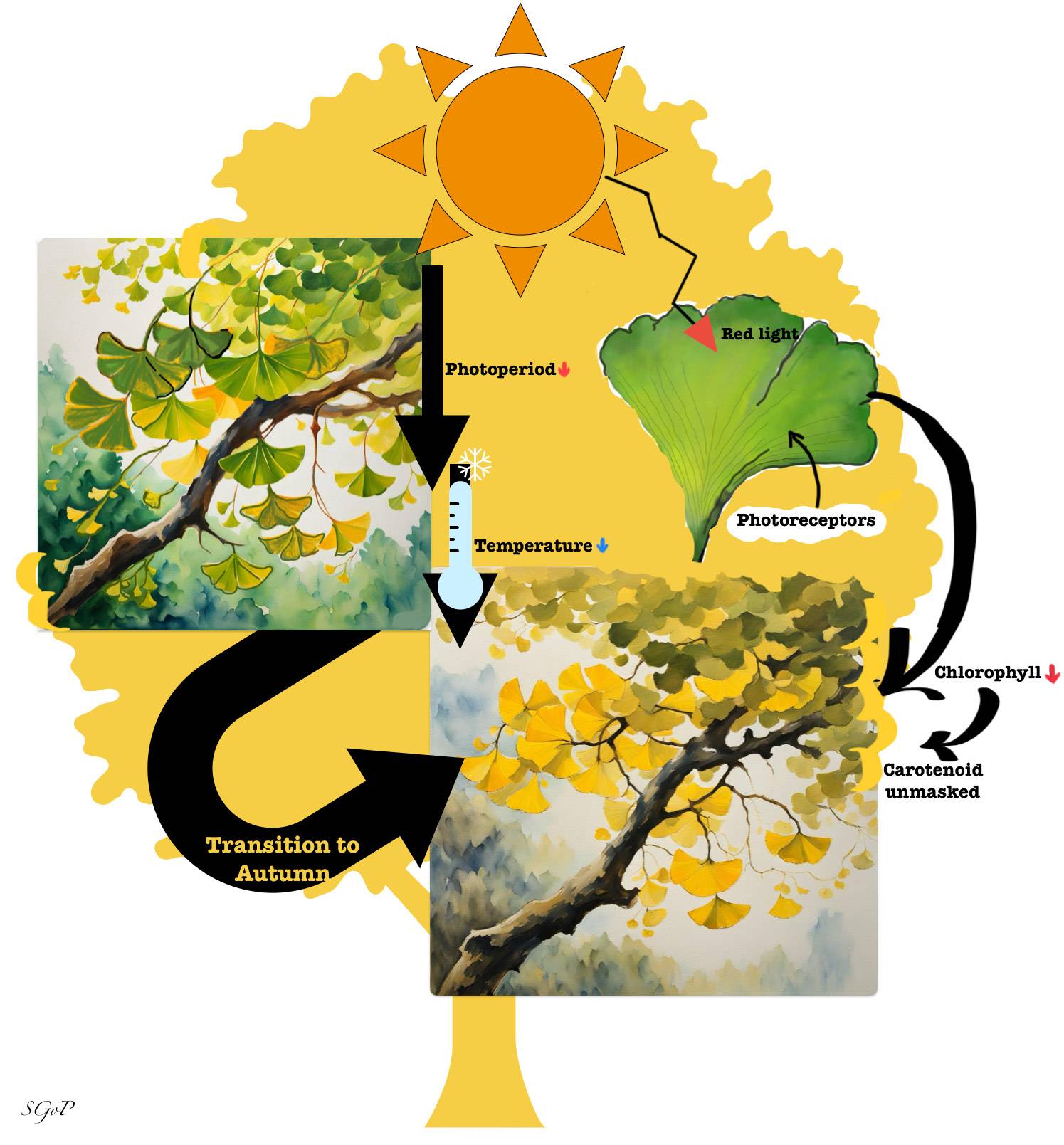
An illustration of the transition to autumnal hues
The photoreceptors or light sensors in the leaves detect the changes in red light levels within the visible light spectrum due to reducing photoperiod. As the red light activates chlorophyll, limited red light causes limited chlorophyll activation.
Simultaneously, with the photosynthetic machinery shutting down, the chlorophyll* content in the 'senescing' leaves decline. Chlorophyll, which would otherwise mask the other leaf pigment (carotenoid*) with its green hue, relinquishes as its amount drops. Hence, the unmasked carotenoid casts a vibrant autumnal palette of yellow or orange before the leaves fall.
The weakening detoxifying system accumulates toxic free radicals*. In response, some temperate deciduous species produce anthocyanins, red pigments, recorded to possess anti-oxidant properties. Anthocyanins radiate in the form of red leaves while neutralising the free radicals within.
However, the weakening detoxifying system prompts a domino effect that produces excess free radicals beyond any significant neutralisation, thus damaging and killing cell structures. Before the leaves 'fall' to free-radical-induced necrosis*, the valuable nutrients synthesised during photosynthesis are 'shifted' to other parts of the tree.
Do Temperate Deciduous Trees Need to Shed Leaves in Autumn?
Autumnal senescence is an epitome of adaptation. During the adverse conditions of low temperatures (sub-zero to 15 °C), potential water scarcity, and reduced sunlight, the temperate deciduous trees undergo a phase of growth dormancy due to discontinued growth hormone* production and photosynthesis. Thus, autumnal leaf senescence and dormant growth phase help the trees conserve energy and avoid severe damage/death by the cold.
How Climate Change Affects the Adaptation of Temperate Deciduous Trees
The onset of the dormant growth phase is characterised by the setting of the bud, i.e., underdeveloped shoots, at the tip of the tree's stem. Shielded from adverse external conditions by protective scales, these buds require a certain cold period before they burst open during the spring.
As of late, with the changing climate, the cold period has significantly shortened. Prolonged warm spells are pushing autumnal leaf senescence further into the calendar year. Erratic weather patterns and early warm springs may deprive temperate deciduous trees of adequate time for a seamless transition, thereby impacting the health and survival of these trees.
How Is the Leaf Shedding in Tropical Deciduous Trees Different?
While tropical and temperate deciduous trees experience a leafless period, the triggers for this phenomenon are distinct. In contrast to temperate deciduous trees, tropical deciduous trees undergo leaflessness primarily in response to water stress rather than temperature.
The onset of the dry season is marked by prolonged rainless days following the monsoon. Despite the mild temperatures during the early months of the post-monsoon period, the senescence in tropical deciduous trees is a response to diminishing water availability in the soil.
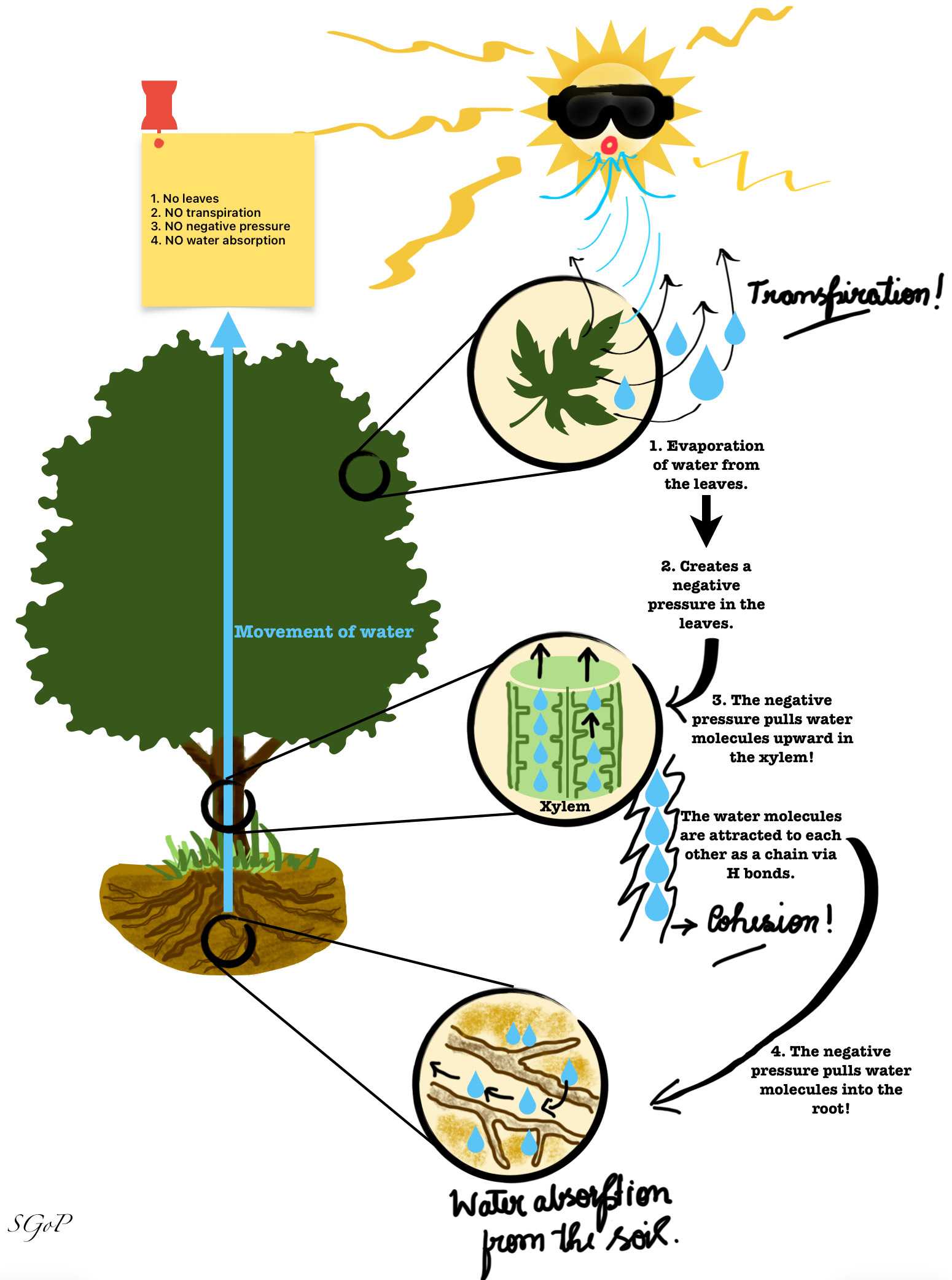
A visual guide to transpiration
How Does Shedding Leaves Help Tropical Deciduous Trees?
To prevent water loss through transpiration* and subsequent death, these trees have evolved to adapt to the dry period by shedding their leaves. The absence of leaves eliminates transpiration, preventing the roots from absorbing water from the water-deficient soil.
Instead, the already-absorbed water is stored. The ensuing months constitute a growth-dormancy phase until a bountiful water supply, such as during the monsoon, is restored.
Can Leaflessness in Tropical Deciduous Trees Be Avoided?
You may wonder if the water stress-induced leaf shedding in tropical deciduous trees can be prevented by addressing the soil-water deficiency. Well, I thought of the same!
However, a review of the existing literature indicated that though water stress can be reduced, shedding could still occur (to a certain extent, if not entirely) due to a reduced photoperiod.
Is There Autumn in India?
By now, the concept of autumn has been thoroughly scrutinised and well understood. It is apparent that autumn is characterised by a substantial change in seasonal temperature, leading deciduous trees in the region to shed their leaves.
However, South India (except for a few districts) does not experience a significant transition in temperature between seasons. Consequently, temperature, the primary driving factor for autumnal senescence, is not the cause behind the observed leaf shedding in Mangaluru. Instead, the notable phenomenon of leaflessness in tropical deciduous trees such as the Teak tree, Gulmohar, and Rain tree in South India is attributed to water stress. No subtle autumn cues there!
The Indian Meteorological Department (IMD) officially designates the period following the monsoon as 'post-monsoon', and does not acknowledge autumn as a distinct season. I find this term to oversimplify India's diverse climate and regional disparities by encapsulating them under a single term!
Let me pin this food for your thought. Unlike South India, Northern regions of the country experience noticeable changes in seasonal temperatures. Winters here bring about significantly lower temperatures, transforming the deciduous trees into a vibrant display of autumnal hues from September to November.
It raises the question: why doesn't the IMD recognize this period as autumn? Considering the deciduous trees undergoing autumnal senescence, isn't this, in essence, the true manifestation of autumn?
Before delving further, I acknowledge a slight deviation from the main topic as I attempt to make a pertinent point. It's worth noting that 'autumn tourism' in North India could play a pivotal role in boosting India's tourism sector. The picturesque landscapes painted with the rich colours of the fall could attract domestic and international tourists, contributing to growth in the tourism sector and India’s economy. What is your opinion?
*Scientific terms for you
Abscission = Shedding of leaves
Genetic regulation = Genes are activated (upregulated) or deactivated (downregulated)
Photosynthesis = Conversion of light energy to chemical energy
Chlorophyll = The green pigment responsible for photosynthesis
Carotenoid = The yellow or orange pigment in leaves
Xanthophyll = A carotenoid responsible for yellow pigment
Necrosis = Cell death
Growth hormones in plants = Auxins, Gibberellins, and Cytokinins
Stress phytohormones = Abscisic Acid (ABA) and ethylene
Transpiration = The water movement through the plants driven by evaporation from parts such as the leaves
Lev‐Yadun, S., & Gould, K. S. (2007). What Do Red and Yellow Autumn Leaves Signal? The Botanical Review, 73(4), 279–289. https://doi.org/10.1663/0006-8101(2007)73
Rosenthal, S. I., & Camm, E. L. (1997). Photosynthetic decline and pigment loss during autumn foliar senescence in western larch (Larix occidentalis). Tree Physiology, 17(12), 767–775. https://doi.org/10.1093/treephys/17.12.767
How Do Genes 'Paint' Animal Coats with Colours and Patterns?
2023-11-24 00:00:00 +0000
I will never forget 2023, the year I battled my anxiety demons and travelled solo from India to Japan. Little did I know that this move would unleash a 'tsunami' of new experiences, both delightful and challenging.
As my life underwent a complete reboot, I longed for the comforting touch of a cat's fur! As previously shared in my blog post titled 'The Rolling Cats: What Really Happens When Felines Meet Catnip?'—I have always had feline companions for that extra boost of oxytocin, especially during moments of stress.
With animal shelters far from the city and the language barrier adding an extra layer of complexity, I decided to explore the Cat Cafe MOCHA in Shibuya, Tokyo. While the setting was undeniably commercial, the joy I felt was genuine.
I encountered a cat that was friendly and sought my company. As I gently stroked her fur, the worries that had burdened my mind melted away. Yet, amid this serene moment with Ocha (yes, that was her name), questions that weren't contemplated during my relentless days working in India began to surface.
The prominent query that echoed in my thoughts was: What determines the colour and pattern of a cat's coat? With a background in biology, I understood the role of melanin in the pigmentation of hair and skin. However, the intricacies of how melanin produced the various hues intrigued me.
As I bid Ocha goodbye and left the cat cafe, I returned home with a newfound determination to research the ever-evolving field of 'colouration in mammals' and seek answers.
Ocha, a Persian cat, flaunts her lustrous coat of brown and white hues
This blog aims to address several questions, helping readers understand coat colouration. Trust me, once you navigate through the information presented, you will never underestimate the power of genes again.
Does the Environment Influence Colouration in Mammals?
The prominent and diverse trait of colouration in mammals results from its environment. Have you ever wondered why a snow leopard has a thick, smoky grey colour adorned with blurred black markings while a tropical leopard has a regular, golden coat with black spots?
What prompts leopards to have spots while tigers exhibit stripes?
Additionally, why does your skin possess its particular shade, while the skin of Europeans appears white, Africans' is black, or Asians' range from brown to yellow? All these questions lead to a common thread: The primary influence on an animal's colouration is the environment it inhabits and adapts to.
The colour of the mammal is scientifically referred to as its 'phenotype' or trait. These traits are intricately tied to the organism's genetic makeup, collectively termed 'genetics'.
Now, imagine a Himalayan snow leopard in a tropical dry forest. Can it survive? Bookmark this question as I will return to it after explaining the mechanisms that drive the phenotype.
Understanding Pigment Regulation and Patterning in Mammals
The pigment regulation determines colour variation. Let me establish that the colours and patterns are pre-determined during embryogenesis or in an embryo before the mammal's birth. In this blog post, let's stick to furry mammals. In furry mammals, the colour variation is determined by pigment regulation and patterning.
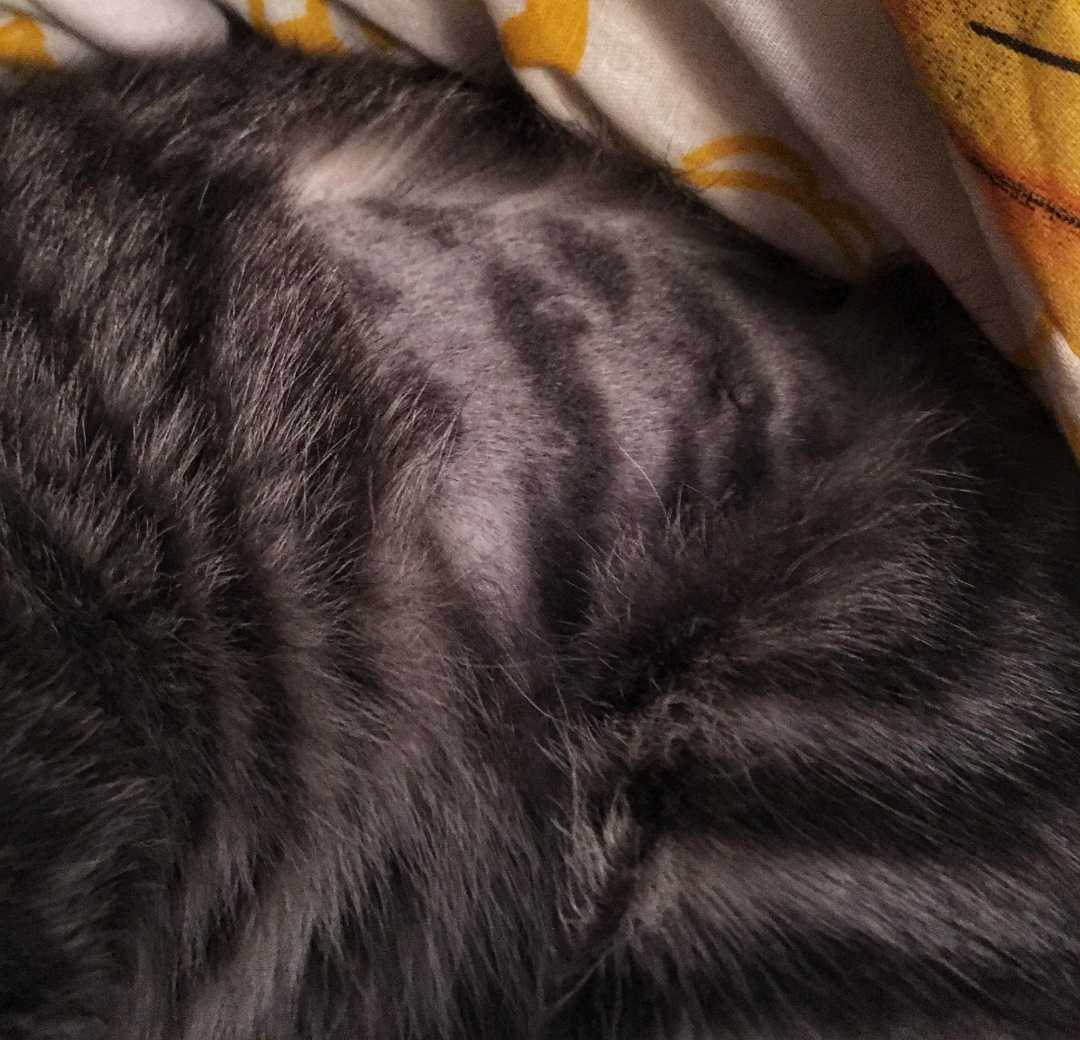
Have you seen a striped or a patchy cat without its coat? Or if you have a cat at home, try to partition its fur where there is a pattern, a stripe or a patch, and look at its skin beneath the coat. The skin beneath the patterned coat shall bear the pattern, too.
A cat's skin colour pattern matches its coat (shaved off). Photo by mildyinteresting/reddit.com
What is Pigment Regulation and How Does It Affect Colouration?
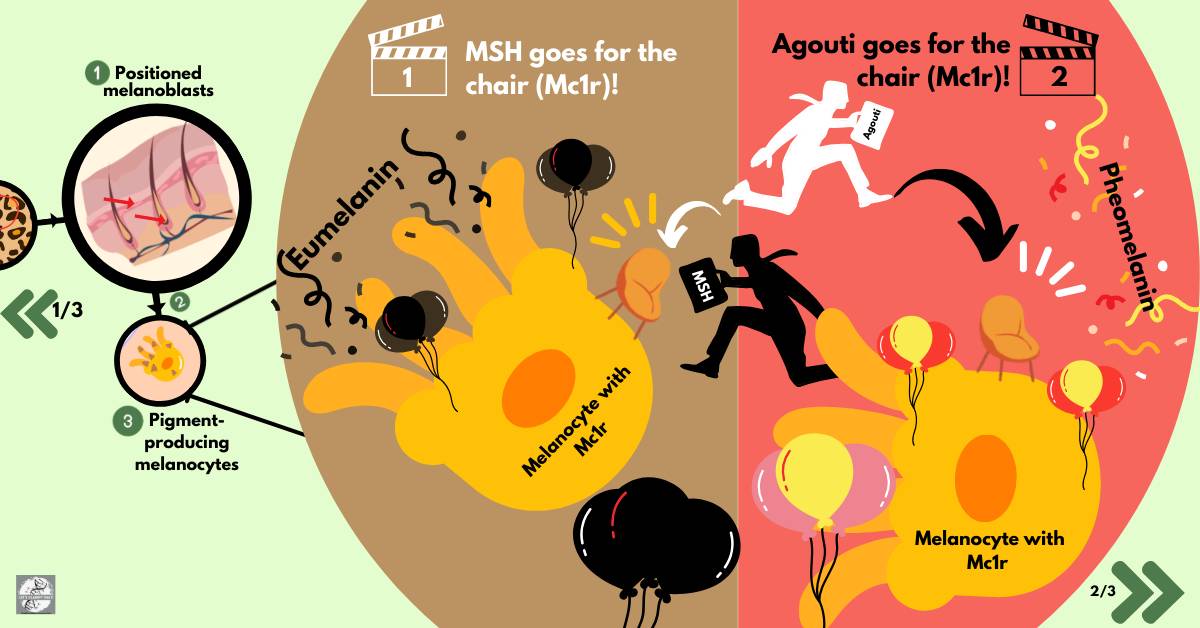
Picture a game of musical chairs, where the last 'two players' vying for the coveted seat are Agouti and MSH (α-melanocyte stimulating hormone). The 'chair' in question is the melanocortin-1 receptor (Mc1r), and the game's outcome depends on who ultimately claims the seat.
If MSH triumphantly occupies the 'chair', the celebration unfolds with 'balloons' filled with the black pigment, eumelanin. On the other hand, if Agouti secures the 'chair', 'balloons' containing the pigment pheomelanin mark the celebration.
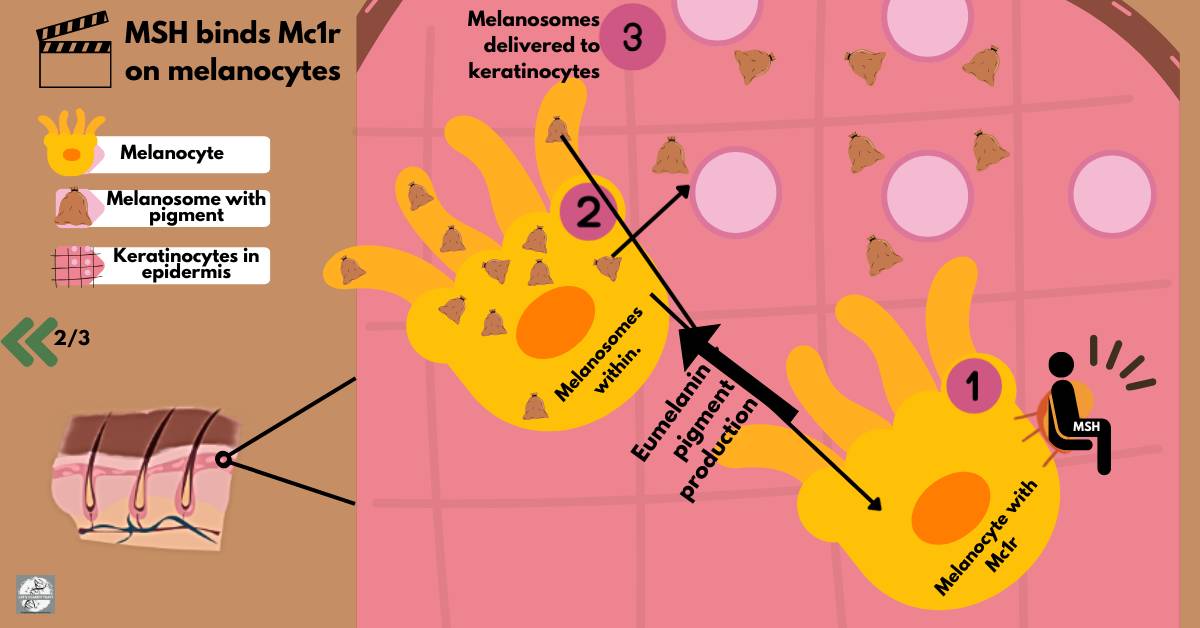
MSH causes eumelanin production from their interaction with the Mc1r. Eumelanin is the pigment responsible for dark colouration, manifesting as black or brown shades.
Upon interacting with Mc1r, Agouti causes pheomelanin production. In contrast to eumelanin, pheomelanin takes the spotlight for light colouration, giving rise to hues such as red or yellow. This is how the pigment regulation unfolds.
What is Patterning and How is it Determined?
The intricate patterns adorning animals, whether in stripes, spots, or patches, are determined during embryogenesis. Remarkably, a blueprint for the colour pattern is established even before the creature takes its first breath.
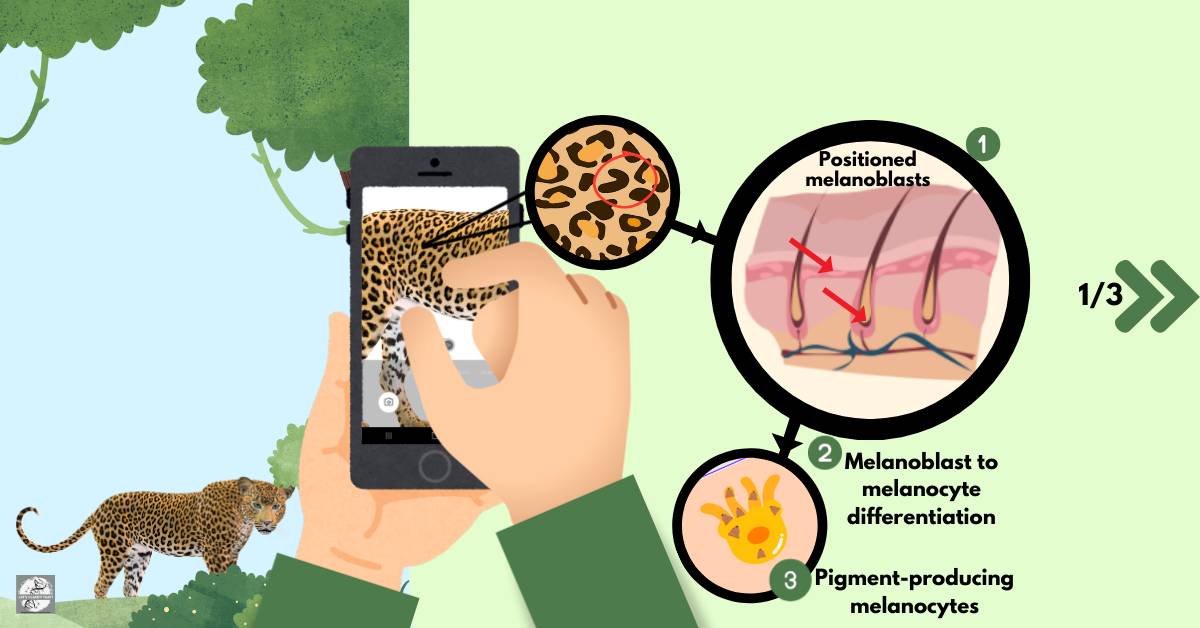
The colour pattern 'blueprint' owes its existence to specialised cells known as melanoblasts orchestrated by specific genes. During embryonic development, the melanoblasts set the foundation for colour patterns by strategically positioning themselves within the epidermis (the outermost layer of the skin) and the hair follicles.
The melanoblasts change into pigment-producing melanocytes. Acting upon the instructions encoded in the creature’s genetics, melanocytes produce pigments, eumelanin or pheomelanin within 'packages' known as melanosomes.
The 'pigment packages' are then delivered to prominent cells known as the keratinocytes within the epidermis. These pigment-containing keratinocytes in the epidermis migrate deeper into the skin to form hair follicles where hair originates and grows.
Since the migrated keratinocytes (which form hair follicles) originated from the epidermis with localised melanoblasts, the skin and the hair adopt the same colour, hence, the pattern. Therefore, any skin region devoid of melanoblast localisation remains bereft of colouration, resulting in a pristine white coat.
Understanding pigment regulation and patterning in mammals
What Determines the Shades of Pigments?
Now that we have understood the intricacies of the pigments responsible for a particular colour and the underlying patterns let's look at the nuances of shades within that colour spectrum. To better understand this, let us revisit the analogy of the musical chair.
Picture a room filled with numerous chairs, and the participants engaged in this whimsical game represent two groups: Agouti and MSH. Each time an individual from either group claims a 'chair', a 'balloon' with pigments representing the triumphant participant's group materialises.
Think of a scenario where the MSH group successfully secures most of the chairs. As the pigment intensity increases, the colour spectrum transitions dynamically from shades of brown to deep black. In Agouti, as the pigment intensity increases, the colour spectrum transitions dynamically from hues of yellow to red.
How Gene Expression Influences Melanocyte Differentiation and Pigmentation
Numerous studies have identified specific genes that play a pivotal role in producing isoforms of pigments, giving rise to a spectrum of different hues. Furthermore, specific genes are instrumental in determining the intensity of melanocyte differentiation. Suppression of the expression of these genes inhibits melanocyte differentiation, consequently resulting in diminished pigment production.
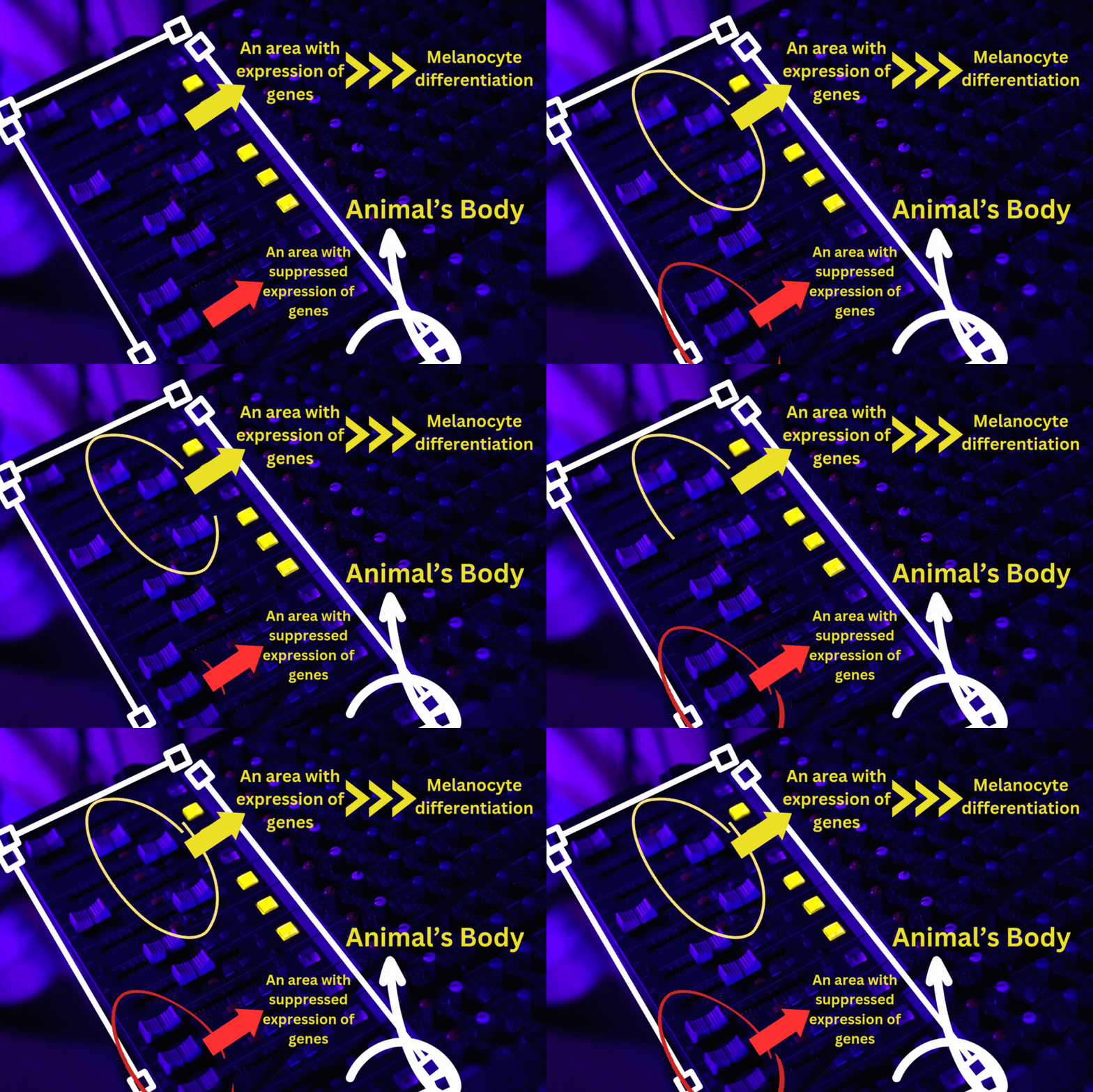
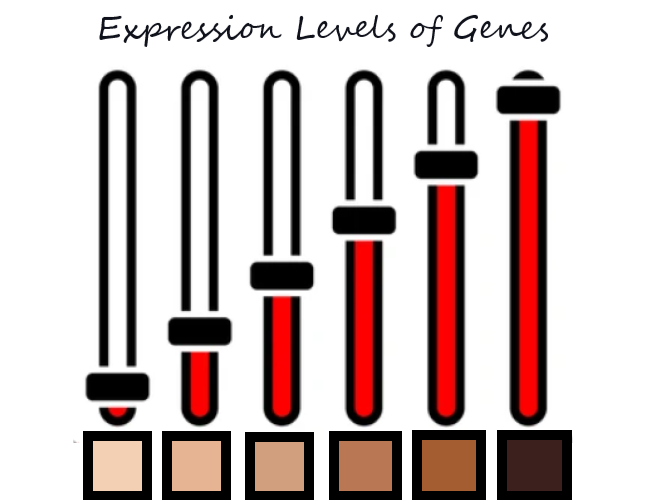
Let's consider another analogy to aid our understanding. Imagine an audio equaliser console. Envision the following:
- The entire console represents an animal's body.
- Each knob on the equaliser shall not only represent the genes but also the extent to which those genes are expressed.
When a knob is turned up or the genes are expressed more strongly, a heightened level of melanocyte differentiation occurs in that region.
Audio equaliser console analogy to understand how gene expression levels alter melanocyte differentiation. Photo by Big Bag Films/pexels.com
Now, imagine a spectrum of colours associated with these gene expression levels. When the knobs are at the bottom (zero) or the gene expression is absent, the area displays a lighter shade due to affected melanocyte differentiation.
The knobs at various levels or the varied expression of genes lead to a spectrum of colours, from lighter tones to the characteristic deeper shade.
How altered gene expression affects melanocyte differentiation and pigment shades: Higher gene expression leads to darker colouration
In a Cheetah for example, when the gene Edn3 is expressed strongly in an area, it leads to melanocyte differentiation. More melanocyte differentiation means more melanosomes and pigment production resulting in the distinctive black spot on the Cheetah's body.
Colours of Life: How Animals Use Coat Colour to Adapt and Survive
Look into the bookmarked question to understand the importance of colour and adaptation. I am sure many of you immediately assumed that the snow leopard would not survive in a tropical dry forest. But why? You are correct if your reasoning centred around the leopard's thick, insulating coat—adapted for colder climates—potentially frustrating the leopard in the heat of a tropical environment.
Other factors challenging its survival include the scarcity of specific prey and its less effective grey coat, leaving it exposed and making it susceptible to predators or hampering its hunting abilities.
The pelage (hair, fur, or wool) is crucial in helping animals blend seamlessly with their surroundings. This adaptive camouflage enhances an animal's ability to hunt and evade predators effectively. The colouration of the pelage is linked to genetic factors, providing a foundation for protection.
In tropical regions, animals boasting dark-coloured coats exhibit resistance to abrasion, enjoy antimicrobial advantages and mitigate the risk of UV-induced mutagenesis.
Moreover, the hues present in an animal's skin, feathers, or pelage play a multifaceted role, influencing aspects such as sexual dominance and attraction and serving as a warning to potential predators.
Numerous examples underscore how colour variation in mammals facilitates their adaptation to new environments. Genetic alterations, whether arising from specific mutations or the infusion of new genetic material through crossbreeding, form the basis for natural selection. Species endowed with these genetic changes demonstrate a higher resilience and survival rate in altered environments than those lacking such adaptations.
Does the mechanism governing colouration in humans mirror that of other animals, or does it differ? Let me know your thoughts in the comment, and if you found this topic intriguing, please consider sharing it with others who might enjoy it too!
References
Caro, T., & Mallarino, R. (2020). Coloration in mammals. Trends in Ecology and Evolution, 35(4), 357–366. https://doi.org/10.1016/j.tree.2019.12.008
You May Also Like Our Articles on Molecular Biology:
How Is Body Fat Symmetrically Distributed in the Human Body?
TOP READER COMMENTS
Guest reader 1: This was incredibly informative. I learned quite a lot from this.
Guest reader 2: This is fascinating stuff! My family has a real interest in this as horse breeders trying to always breed "paint" horses. I never knew colour has so much significance.
Guest reader 3: Ha, what an explanation. Explained every question why? When I read the blog. Once again well written blog with every minute details explained. 👍
The Rolling Cats: What Really Happens When Felines Meet Catnip?
2023-09-15 00:00:00 +0000
Have you seen the videos of cats going bonkers over catnip? An otherwise serious and composed cat would lose its mastery over self-restraint. Although I have been a cat parent for over a decade, I have never had the chance to introduce catnip to my furry friends. Nevertheless, I observed similar behaviour with Taz and Tango, my first fur babies.
During the month of 'Shravana', the fifth month of the Hindu calendar marking the beginning of the festive season, my mother would prepare 'chudis', small bouquets, on the auspicious days of 'Chudi Pooja'. This 'chudi' was crafted from flowers not typically used in prayers. Among the blooms of the Shravana month, the 'Durva' grass, commonly known as Bermuda grass, is an important component in the 'chudi'.
The rains remind me of my mother and me, standing under an umbrella while clutching the plastic with flowers, Selaginella delicatissima ferns, and the Bermuda grass collected from strategic spots near our home. Worldwide, Bermuda grass, scientifically known as Cynodon dactylon, is considered a noxious weed. However, urbanization has made its availability scarce.
One sunny morning of Shravana Sunday, I woke up to my mother's yelling. As I stepped out of my bedroom into the living room, I could not believe my eyes! My mother and the kittens were engaged in a tug-of-war over the Bermuda grass she had laboriously collected. Tango had already secured her share of grass, but Taz held onto the grass between his jaws while my mother clasped to the grass, laughing. After examining Tango's behaviour, my mother let Taz win.
Taz and Tango had gone crazy over the grass, rolling over its blades, rubbing their heads and faces against it, and constantly sniffing and munching it. During that Shravana season, this episode repeated every Sunday, eventually escalating to the 'chudi' abduction. The grassless 'chudis' would be found elsewhere in the house the following day.
Now, speaking of feline behaviour, let us delve into the science behind catnip's effects. On the day of International Cats Day (August 8), I came across an article by Uenoyama et al. (2021) that piqued my interest. It elucidates the impact of catnip and silver vine on most cats and delves into their characteristic response to plant iridoids.
But what exactly are iridoids, you might wonder? In this blog, I aim to simplify the science behind cats' response to catnip and silver vine, as discussed in the article.
What Is a Cat’s Behavioural Response to Catnip?
Some animal behaviours are inherited, while others are influenced by their environment. Behaviours are often acquired to better adapt to the animals' surroundings. However, specific chemical components can elicit species-specific behaviours, as observed in felids (a cat family member) when exposed to catnip and silver vine plants.
The article addresses several questions, including the behavioural response. Initially, the animal may be momentarily stunned but quickly starts sniffing, licking, and chewing on the plant while also rubbing its head and face against it. This behaviour is followed by the animal rolling on the ground and becoming unresponsive for hours afterwards.
What leads to this intoxication in cats when exposed to catnip? Are there any pathophysiological effects or benefits associated with this behaviour?
Iridoids in Catnip: Why They Stimulate Cats
The authors of the article attribute the behavioural responses to the chemical stimulant iridoid nepetalactone found in catnips. Silver vines contain the chemical substances isoiridomyrmecin, iridomyrmecin, isodihydronepetalactone, and dihydronepetalactone which induce the same behavioural response. Do not fret over the lengthy chemical names! Just remember that these plants contain chemicals that stimulate a reaction in the felids.
Although this behaviour in cats was documented first in the 18th century by a Japanese Botanist, the functional outcome of the behaviour remains unclear even today.
To unravel the functional outcome and the mechanism behind the behaviour, the researchers ought to have the chemical component nepetalactol on them. Organic solvents were employed to extract the chemical components from the silver vine leaves. Once extracted, the chemical components were purified by the researchers.
I shall keep this article simple and not delve into the technical details of the techniques used. However, I will mention that mass spectrometry confirmed that the major extracted chemical component was nepetalactol, among others. Simply put, the researchers obtained the chemical component required for their study.
It is important to note that in research, a few outliers are expected— observations that differ from the norm. In this study, a few cats did not respond to the test situation due to inherent negative responsiveness or unfamiliarity with the scenario.
To subject the cats (25 in number) to nepetalactol, 50 µg of this chemical stimulant was introduced into a filter paper and placed on the ground. Eighteen cats exhibited the characteristic response towards the nepetalactol filter paper for ten minutes, after which their interest waned, similar to the reaction to the silver vine plant. The study design included a control where the cats were exposed to filter paper containing only the solvent (extraction) but no nepetalactol. The cats displayed limited to negligible response to the control.
So, we now understand 'what' causes the behaviour and 'how' the study was conducted to uncover the same. Next, let me outline the mechanism driving the felids to display the characteristic response exhibiting extreme pleasure.
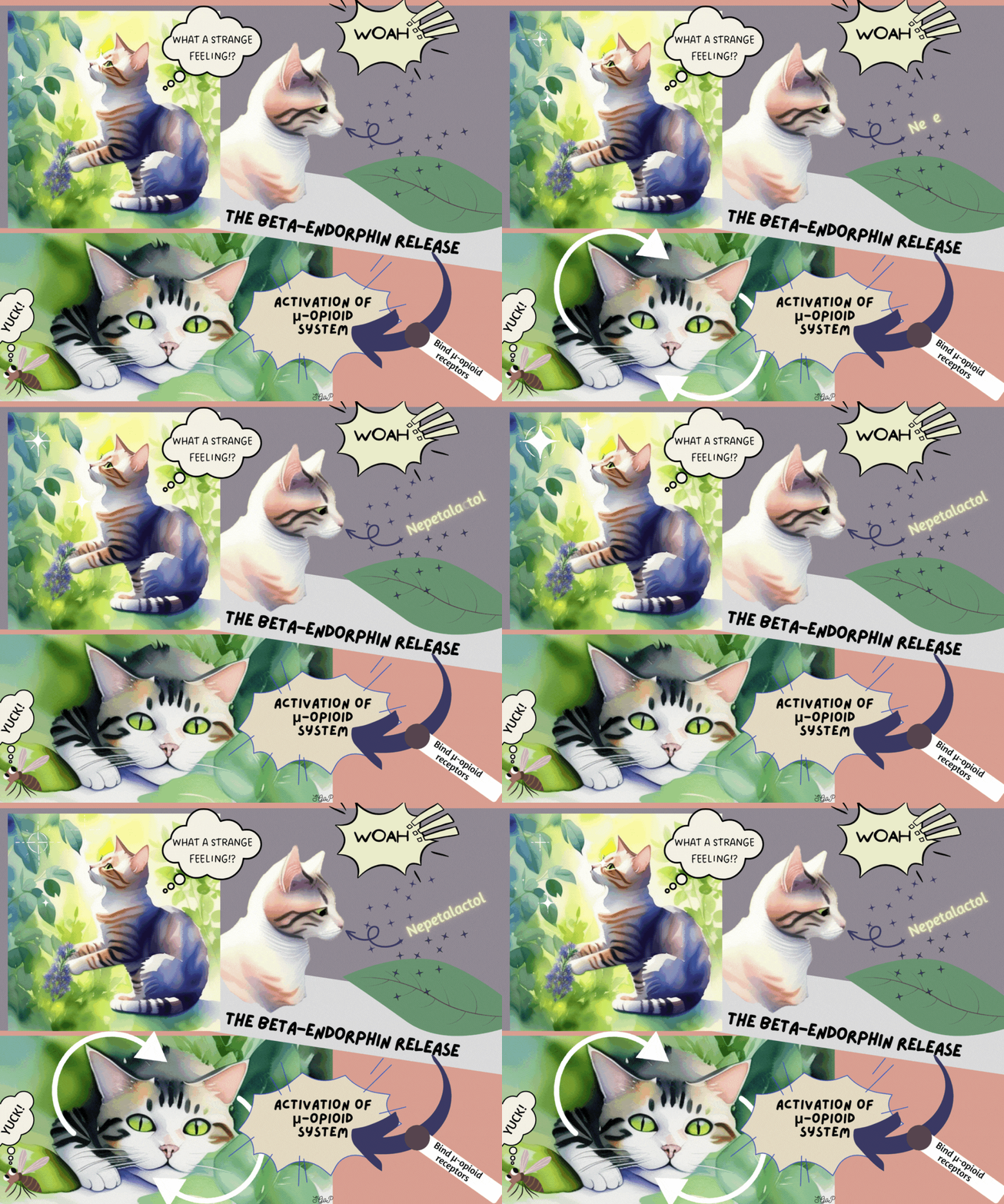
Nepetalactol stimulate cats
Mechanism Behind Catnip’s Euphoria in Cats
Just as humans provide blood samples for various tests, the researchers studied the blood drawn from cats exposed to 200 µg of nepetalactol and found high levels of β-endorphins.
β-endorphins are opioid neuropeptides (short protein chains produced by the neurons) with stress management and pain-relieving properties.
You are probably familiar with the term 'opioid'. However, β-endorphins are opiates produced naturally by our body. For β-endorphins to have stress or pain-relieving effects, they must bind to specific receptors, known as µ-opioid receptors. These receptors are found throughout the body, brain, and cells of the immune system (Pilozzi et al., 2020).
When β-endorphins bind to µ-opioid receptors, they not only provide an analgesic effect (pain relief) but also induce feelings of reward and euphoria (feeling happy and excited).
To sum it up, a cat's olfactory system (sense of smell) picks up nepetalactol that stimulates the production of β-endorphins, activating the µ-opioid system. The high β-endorphins bind to µ-opioid receptors, evoking the behavioural response associated with the sense of pleasure.
Why Does a Catnip-Stimulated Cat Roll?
Does rubbing and rolling in nepetalactol-stimulated cats have any function? To establish if rolling on the ground was a behaviour with a role, the researchers placed the 200 µg nepetalactol filter paper on the ceiling or the walls of the cage that housed the cats. The cats were motivated to come in contact with the nepetalactol filter paper.
As the source of nepetalactol was not easily accessible, the cats resorted to rubbing their heads and faces on the paper while standing on their hind legs or climbing the cage to the paper, if necessary. However, no subject cat rolled on the ground in this scenario compared to when the nepetalactol filter paper was on the floor.
What did this behaviour change suggest? This behaviour change helped the researchers establish that the behaviour was functional. Cats would rub themselves against or roll over the source of nepetalactol only to transfer it and spread it on the fur.
What I find intriguing about this article is how the researchers have left no stone unturned! To establish the effect of the catnip or silver vine on felids, the researchers conducted similar studies on non-domesticated felids at zoos in Japan, in addition to domestic cats (Felis catus).
An Amur leopard (Panthera pardus orientalis), two jaguars (Panthera onca) and two Eurasian lynx (Lynx lynx) exhibited prolonged face rubbing and rolling on nepetalactol-paper (placed on the floor) than on control, confirming their findings. On the other hand, dogs (Canis lupus familiaris) and mice (C57BL/6) exhibited no interest or response to nepetalactol, affirming the nepetalactol-induced behaviour was specific to only felids.
Other Effects of Nepetalactol on Cats
Apart from analgesic and euphoric effects, nepetalactol in silver vines have any other benefits for cats. The behaviour of the cats towards nepetalactol suggests an adaptive function. Rolling on and rubbing against the nepetalactol-containing silver vine or nepetalactone-containing catnip helps protect cats from mosquitoes.
This study was conducted in Japan, where nepetalactol on a cat's fur acted as a deterrent to Aedes albopictus mosquitoes. Therefore, the researchers concluded that this functional behaviour in cats was acquired as an adaptive function to protect them from insect pests using plant metabolites.
After reading the article by Uenoyama et al. (2021), I began to wonder if there might be a similar explanation for the behavioural response to the Bermuda grass by Taz and Tango. Evidence only shows that eating grass can benefit the cats' gastrointestinal system—relieve indigestion and expel parasites and hairballs.
In addition, Hart (2008) clarifies that grass consumption does not necessarily indicate gastrointestinal illness but could be an inherited trait from their wild ancestors. However, I still cannot fathom my kittens' obsessive behaviour towards the grass. Until a study reports an analgesic and euphoric effect of Bermuda grass, I would make peace with the simple fact that the shape and texture of the grass might have triggered an instinct in them.
Did this article help you understand the science behind your cat’s love for catnip? We’d love to hear your thoughts and experiences in the comments!
How Your Immune System Battles Influenza Reinfection: A Narrative
2023-07-27 00:00:00 +0000
We all despise seasonal flu—days spent in bed with a pounding headache, lethargy, fever, stuffy nose, coughing up coloured mucus (which you never expect to come out of you!), and the body's predicament between chills and sweating.
The only silver lining during the flu is being pampered and enjoying some comforting chicken soup. That is if you can taste it!
I remember being down with the flu most of the time when I was eight and nine. In my bedroom loft, my parents had placed a box of non-stick cookware with a picture of a delicious 'Bindi ki sabzi', or okra dish, along with other items.
This image taunted me of the bland meals offered during my days in bed. Alone in my bedroom, as I lay with heavy eyes and a parched and sore throat, weak and exhausted, I wondered if this was what life was all about!
Fortunately, years later, I could maintain perfect attendance at school. I was no longer susceptible to the clutches or, shall I say, the 'spikes' of the seasonal flu. It was only a few years later that I learnt about the immune system.
Our immune system is complex, and complex mechanisms protect us from being vulnerable to disease-causing agents. These agents include viruses, bacteria, fungi, protozoans, and parasitic worms. However, let me restrict this blog post to the immune response against viruses.
Introducing the Influenza Virus: The Villain Behind Flu
From the above context, you must know by now that the discussion will include the influenza virus. But which influenza virus? You should know that only specific influenza virus strains (variants) can infect humans. Particular strains infect only birds, while others infect mammals, such as swine or horses.
In this blog, I shall not provide an in-depth account of the structure of the virus, as it is totally out of scope. However, I will be concise on it to help you appreciate your immune system.
Influenza A is generally responsible for human pandemics. So, I shall anoint it the 'villain' of the story! What does the villain look like?
Meet Influenza: A Closer Look at This Microscopic Invader
As we have seen in movies, villains usually don the most bizarre costumes, long dark hoods, capes, bold jewellery, spikes, etc. Similarly, the villain of this story, influenza A, is enveloped with 'spikes' all over.
The spikes are weapons comprised of haemagglutinin and neuraminidase. Within this envelope is the nucleocapsid, a protein layer that protects the genetic matter.
All villains have weaknesses that can destroy them. If this villain is targeted, the genetic material, eight single-stranded RNAs, is its greatest weakness!
The villain is also a remarkable 'con artist'. As a part of their game, these con artists change their identities. But how does influenza A do it? The villain alters the haemagglutinin and neuraminidase spikes protruding from its envelope. These changes can occur gradually or suddenly.
Now, who protects us from these con artists, a.k.a. villains?
Immune System: Body's Ultimate Defence System
Our complex immune system defends our body against the invasion of foreign particulate matter, including influenza A. Hence, the immune system has also been termed the defence system.
The first line of agents in the defence system is the macrophages and the neutrophils. A warning is raised the minute the villain is detected. The alarm alerts the other agents of the defence system, including the T cells and B cells*. These agents remain active in the villain's presence and produce memory cells.
How Does the Immune System's Defence Operation Unfold?
Remember the eight-year-old me sick with the flu in bed? I was a naive subject who hadn't encountered the villain before. The villain entered my body as I breathed in the aerosols where they were dormant.
The villain's weapon, haemagglutinin, clasps the cell receptors and invades them. Once the villain proliferates inside, they swarm out, using neuraminidase to slash open the infected cells.
Meanwhile, the first line of agents in the defence system quickly identify the haemagglutinin spikes on the villain as foreign, thereby initiating the defence operation. The activated T cells trigger B cell activation. The B cell defence system has two wings: the short-lived plasmablasts and the memory cells.
Plasmablasts generate specialised weapons called 'antibodies'. During the defence, antibodies increase in the body, preventing the villains from entering healthy cells. Simultaneously, the T killer cell wing kills the villain-infested cells. Thus, the agents, T and B cells, work together to neutralise the villain. The activated immune response to the villain is what we experience as 'flu symptoms'.
Battling the Flu: How Your Immune System Prevents Influenza Reinfection
The memory cell wing logs the revealed villain's identity into their 'villains' database'. When encountering familiar villains, the memory cell wing would recognise the villain and activate rapidly. The powerful fighters producing a surge of antibodies would swiftly neutralise the invaders. Hence, saving us from that villain, influenza, once again!
The immune system battling the influenza virus
Why Are Influenza Viruses Con Artists? Their Trickery and Immune Evasion
I would fail if I did not clarify why I termed influenza A the 'con artists'. In a constant game of deception, the villain changes its appearance, altering their antigens** and leaving the memory cell wing of the immune system bewildered.
These changes can leave the defenders unable to recognise the new identity of the villains, rendering their weapons less effective. The defence system flounders to keep up with these con artists, leaving us susceptible to reinfection. A sudden, drastic transformation could lead to cross-species infections that unleash pandemics. However, this is a topic for another day.
We have an incredible defence system, don’t we? If you enjoyed this article and found it comprehensible, feel free to comment and share it on your social media!
*T and B cells originate in the bone marrow. However, the abbreviations T and B are Thymus and Bone marrow, where these cells mature.
**The molecule that activates the immune response is called the 'antigen'. Hence, haemagglutinin is an antigen!
The weapons, or antibodies, are specific to the antigens. Any changes to the antigens render the antibodies useless.
Why Workspace Ergonomics are Important: My Personal Story
TOP READER COMMENTS
Guest reader 1: I love your writing style. It made for an interesting read about Influenza.
Guest reader 2: This is such an interesting, important and informative article. Thanks for sharing.
Guest reader 3: From what I've heard, Influenza is a dangerous virus. Thanks a lot for educating all of us about it!
My Research Journey: How Does the 'Ladder' Plant (PTERIS VITTATA) Decontaminate Water?
2023-03-07 00:00:00 +0000
As this is my first blog, I would like to introduce myself. Do not worry! I shall not begin with a 'My name is...' Rather, you should know a tad about me in every blog piece, still focusing on the core purpose of this site.
I pursued my research on the phytoremediation of heavy metal-contaminated water. A lot of mumbo-jumbo words there? Let me simplify the terms; phytoremediation is the decontamination of a polluted source using living plants.
Heavy metals are toxic to any living organism beyond a particular concentration. You may wonder, I just said that plants are used to decontaminate a source. Hence, doesn't a plant, a living organism, get affected by the toxicity of heavy metals? Well, they are. However, some plants can tolerate higher heavy metal concentrations and are found growing with ease in such contaminated areas like it's no big deal. Let us refer to such plants as 'super-plants'.
My Engagement with a 'Super-Plant'
I chose to work with such a plant. However, the super-plant I selected wasn't any regular angiosperm (flowering plant) but a pteridophyte. Pteridophyte, what is that? You might have heard about ferns. Yes, those ornamental leaves in bouquets.
Non-flowering pteridophytes are the most primitive, well-developed plants that have withstood the test of time. Hence, terrestrial and aquatic ferns can endure various stresses, including high concentrations of heavy metals.
Historically, when was the superpower of the pteridophytes realised? Proceed, and you shall know.
Herbarium of Pteris vittata.
The Superpower Called Pteris vittata
It's a Chinese Brake... a Ladder Brake... also called a Brake fern... YES! It's the 'super metal absorbing fern' Pteris vittata L.
The lush green treasure and its superpower were undiscovered until the beginning of the 21st century. It was first discovered by Lena Q. Ma and her teammates in 2001, growing abundantly on an abandoned site where wood preservation using chromated copper arsenate was carried out. Read the original report here.
When no other plant species in that region could grow in the soil, this super-plant grew to tolerate 1,442–7,526 p.p.m. of toxic arsenic. Due to this finding, this treasure was more worthwhile than anticipated and turned out to be a super-plant. Thus, the world was introduced to the super metal-hyperaccumulating plant.
What Makes Pteris vittata the Best for Phytoremediation?
Over the years, the worth of this treasure doubled as it was utilised in phytoremediation, i.e., decontaminating the heavy metal-polluted lands using Pteris vittata. The heavy metal accumulated Pteris vittata reduced the heavy metal concentration in the contaminated land. Researchers worldwide were thrilled to discover that accumulating and transforming the toxic metals to lesser toxic forms are a few of the many superpowers of these super-plants.
Dr Smitha Hegde, a well-established pteridologist (one who studies ferns) in India, expresses her fascination with the fern. She reiterates that the fern is indeed a super-plant with superpowers. Why? Because of its resilience, she says. Resilience to urbanisation and how it can thrive on very little. The nutrients are derived from the water from leaky drain pipes of buildings, lines of air conditioning units, or leaking water taps.
Pteris vittata grows swiftly through spores (like seeds, but technically not seeds!) with the right amount of moisture, phosphorous, and other nutrients throughout the year. She points out how the environmentalists and farmers worry about this super-plant taking over other vegetation. With Pteris vittata not having any nutritional significance and having a bitter taste (due to excessive alkaloids), herbivores do not prefer them. Hence, the mature ferns are not an active part of the food chain.
At this point, the super-plant might sound like an unstoppable alien that is taking over. However, it faces a different fate. A fate where the farmers conveniently destroy the super plants to make way for commercial crops.
Utilising Pteris vittata for Water Decontamination
In spite of the known superpowers, the super-plant is losing researchers' attention in the field of phytoremediation. To alter the destiny of the super plant, I, along with my mentors, set out to up-scale the super-plant.
The researchers gave it a new 'avatar', a biosorbent. So, what is a biosorbent? A biosorbent is a non-living biological material with an 'adsorption' capacity. I have formatted the 'ad' of adsorption to bold to highlight the principle. Adsorption involves binding an atom, ion or molecule via various bonds or forces of attraction to a surface.
With the new avatar, the super-plant biosorbent was to decontaminate polluted water by adsorbing the pollutants, heavy metals, on them.
Transforming Pteris vittata into an Efficient Biosorbent
The excessive availability of the weedy super-plant growing on compound walls, courtyards, tiles, and buildings was another reason for the desperate need to find an additional application, as people feared its capacity to destroy man-made structures. While the people received free clean-up services, the research team got the super-plant with water decontamination power.
Plant foliate (leaf of the ferns) was collected, separated and washed thoroughly to remove the extraneous, dried, and then powdered. The powder obtained is the biosorbent, the new avatar of the super-plant, Pteris vittata.
Experiments to Determine Biosorbent Effectiveness
The researchers conducted several experiments to standardise the best operating conditions, including the operating pH and temperature of the polluted water, the time required, the concentration of metals, the particle size of the super-plant biosorbent and the amount of biosorbent for a maximum metal uptake.
These experiments aimed to determine if the super-plant biosorbent was as effective as when living. With just 1 gram of the super-plant biosorbent in a litre of single-metal contaminated water, the super-plant removed 126.58 mg of Pb(II), 31.06 mg of Cd(II) and 166.67 mg of Cr(VI)!
Further examinations showed that the super-plant biosorbent's functional groups, texture, morphology, elemental composition, surface area, and porosity influenced its superpower to remove heavy metals from contaminated water. Thus, the research team was glad to have found the scorned super-plant.
Improving the Convenience of Pteris vittata as a Biosorbent
The researchers further explored the easy handling of the biosorbent, and pelleting the super-plant biosorbent was a more acceptable option. Though the path ahead was challenging, the researchers successfully pelletised the super-plant biosorbent.
The trick lay in finding the suitable particle size of the powder, the right binder, the right binder consistency, and the correct binder-to-powder ratio. Stable 'magic pellets' were obtained with the standardisation of the pelleting process.
With the stable 'magic' pellets, the researchers used them to decontaminate heavy metal-laden water. The superpower of the plant was still retained even in its pellet form.
The researchers aim to improve metal-laden groundwater's potability by adding the pellets into the water. The investigations have exposed a marvel in the non-living form of the super-plant. As planned, the researchers have altered the destiny of the super-plant. The superpowers of this plant have reached new heights in its ability to decontaminate water!
What are your thoughts on using plants for environmental remediation? Share your opinions in the comments below!
TOP READER COMMENTS
Guest reader 1: Nicely written. A non biology person like me could understand. Pls do write more blogs on such topics.
Guest reader 2: It's a well written article highlighting the significance and utility of Pteris Vittata in decontaminating the polluted land and water. Appreciate the author for her effective writting and the concern she has for the environment. Blogs like this are really informative and I welcome more such information from her.
Guest reader 3: Wow, that was a very thorough investigation of how Pteris Vittata decontaminates water! I think whever we can use natural means to help the environment all life is better off.
I launched Let's Clarify That in 2023 as a platform to showcase my efforts at simplifying biology.
Bridging the gap between complex biology concepts and the general audience has always been a passion of mine.
I use analogies, infographics, and illustrations to deliver.
Let's Clarify That features science articles on general biology and health, either published elsewhere or self-published as blog posts. You can explore the site and my social pages to get a glimpse of my work.
I am open to collaborations—be it content creation, outreach, or creative projects.
If our interests align, feel free to get in touch.
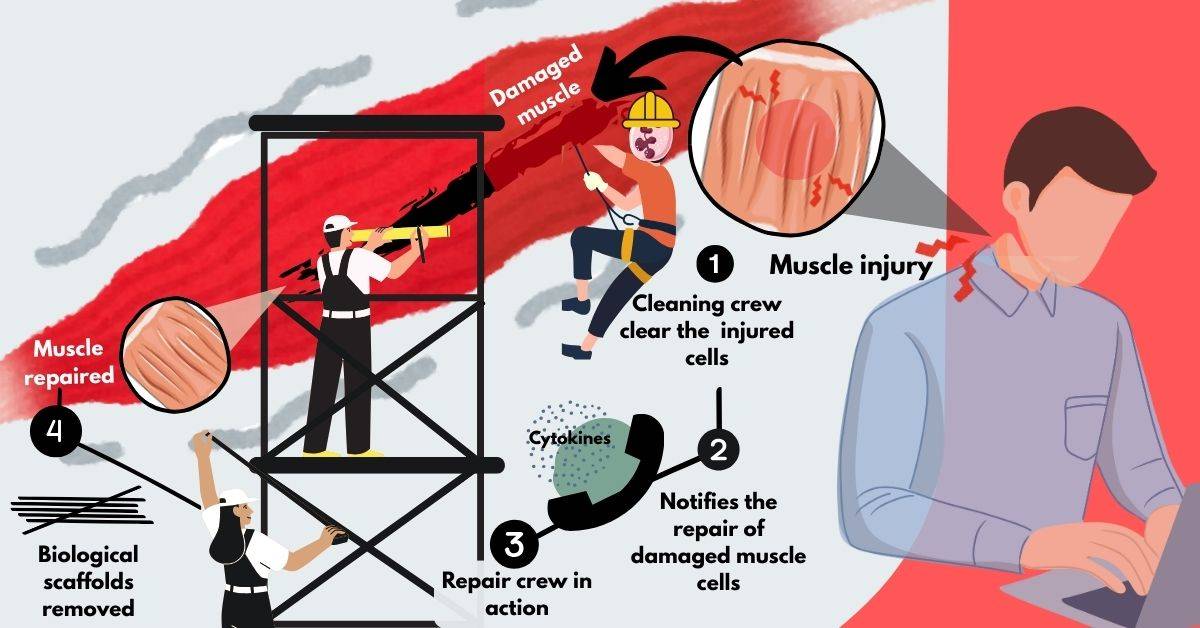
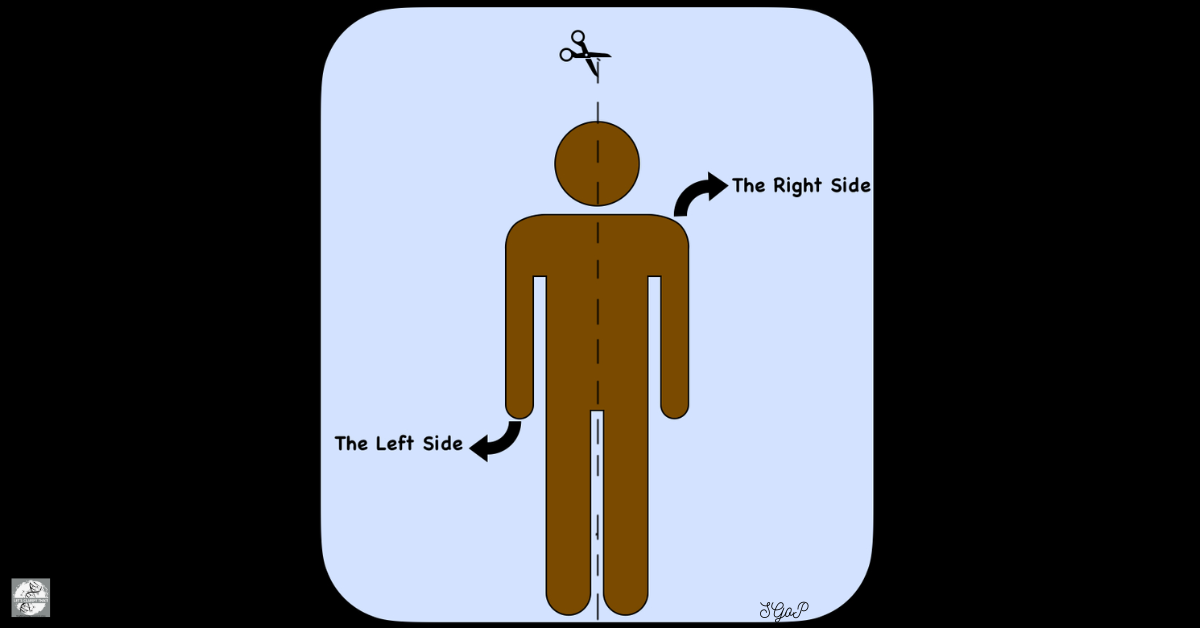
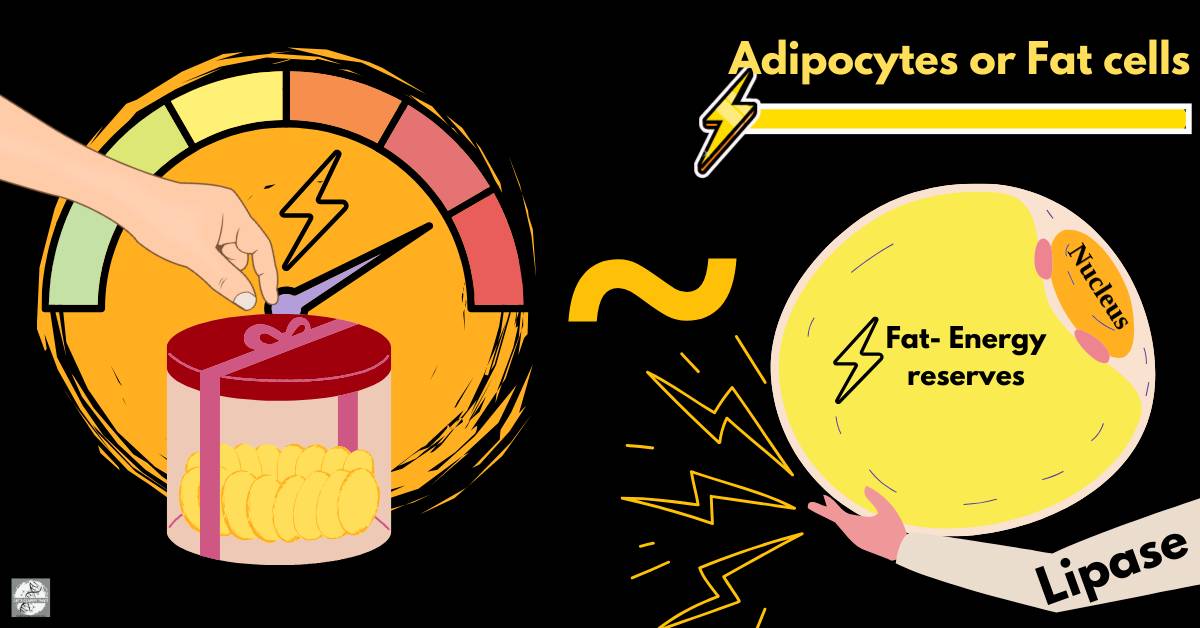
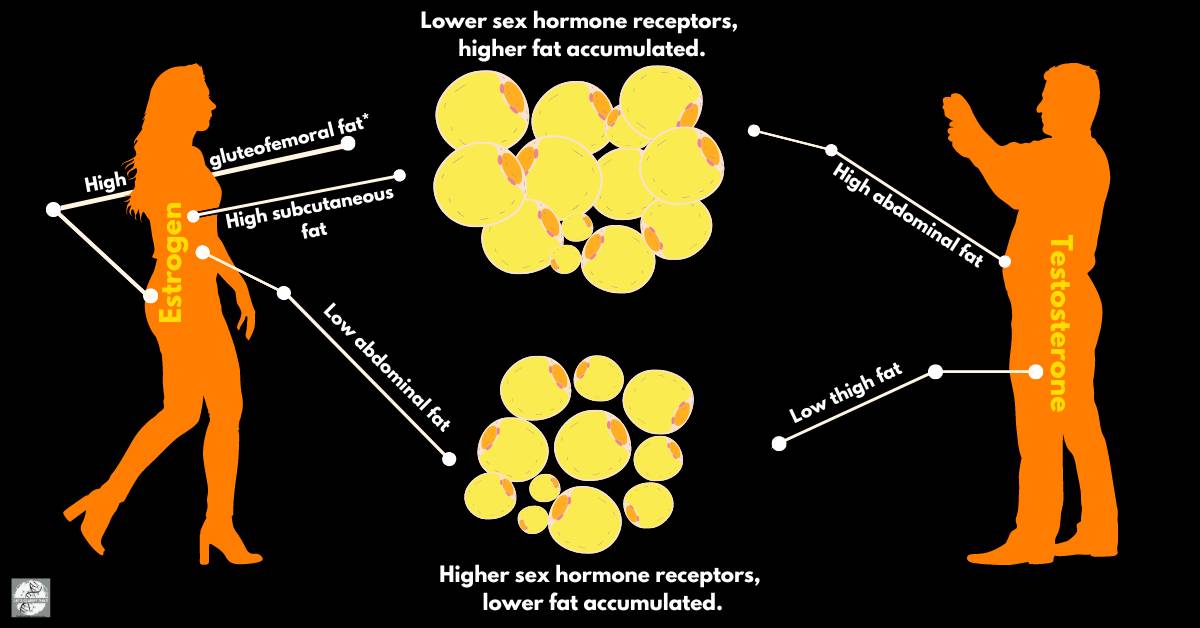
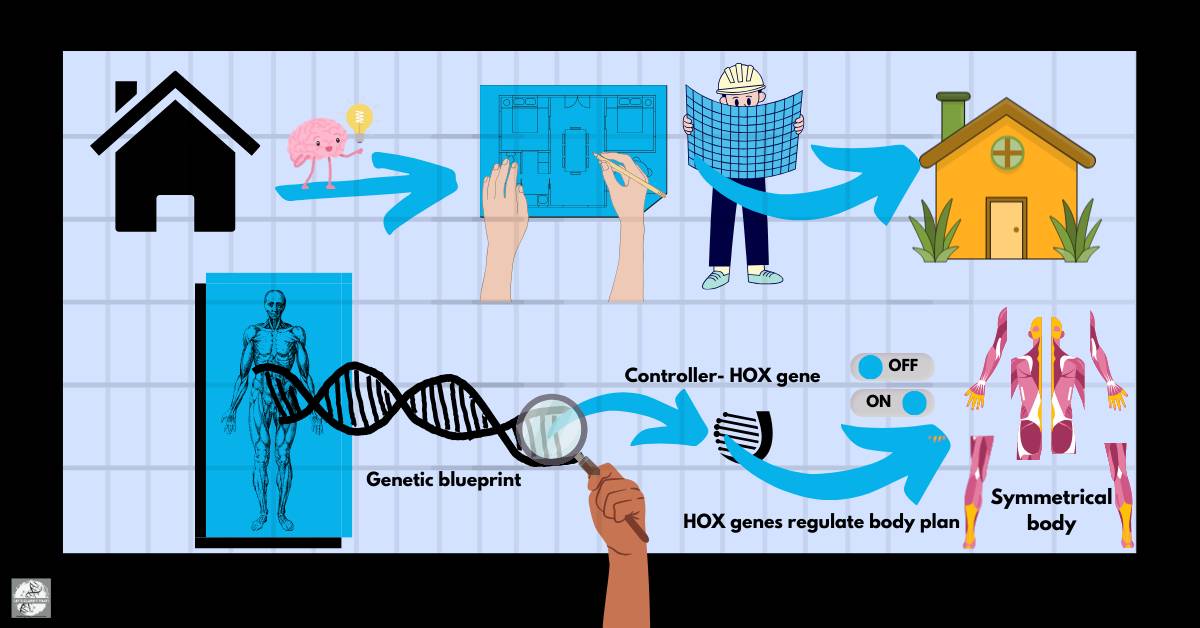
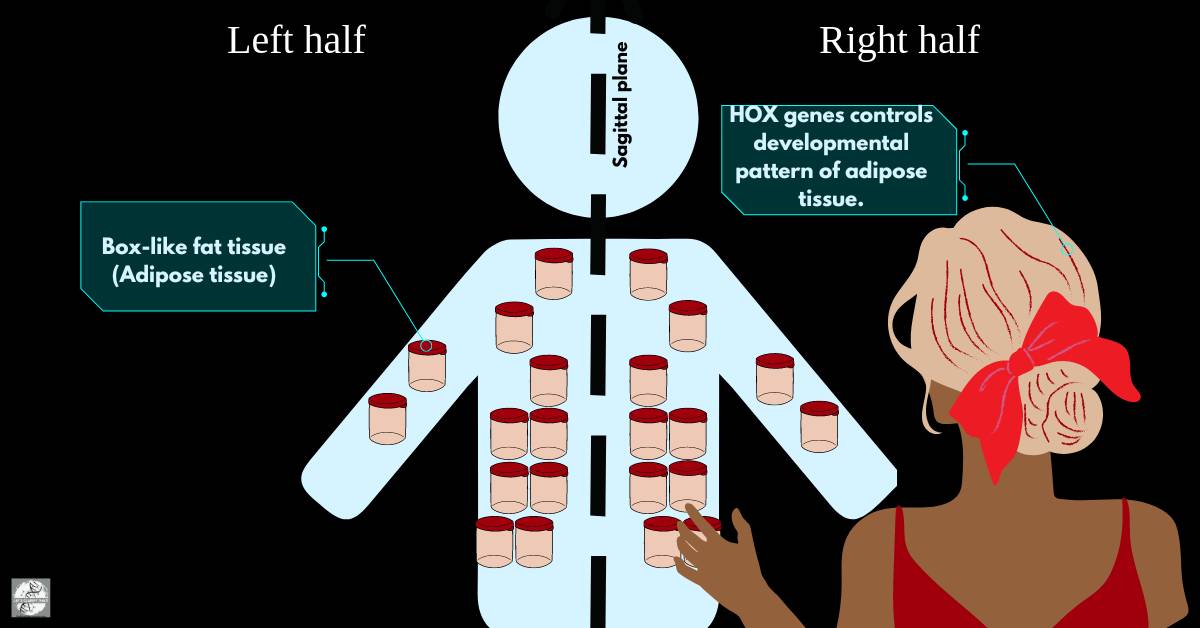

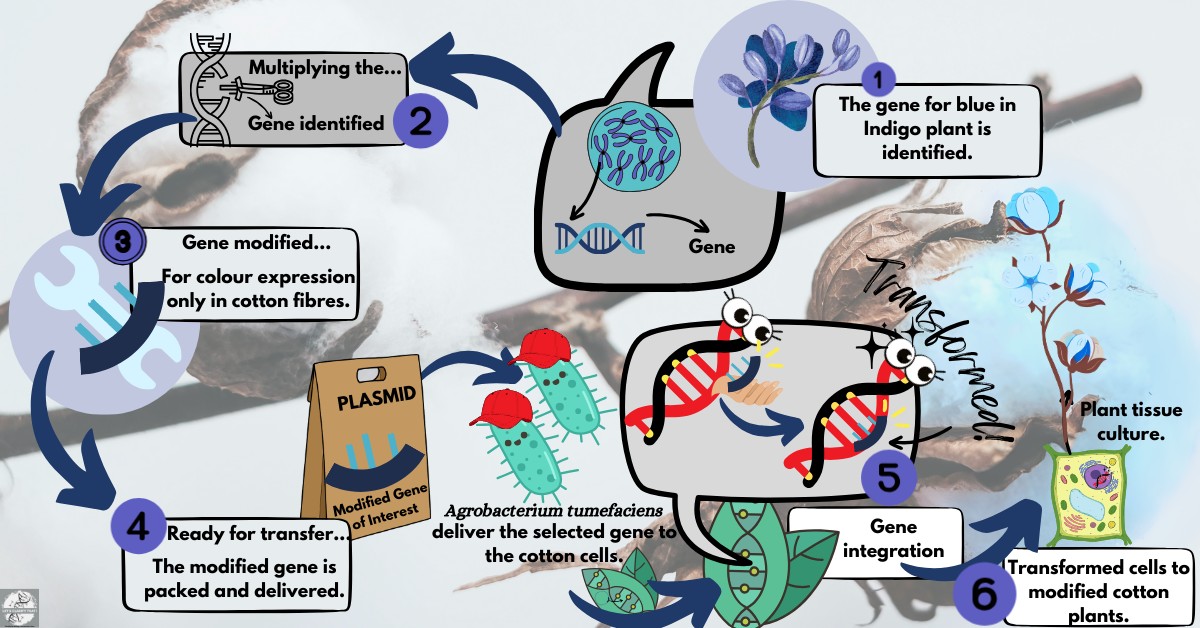
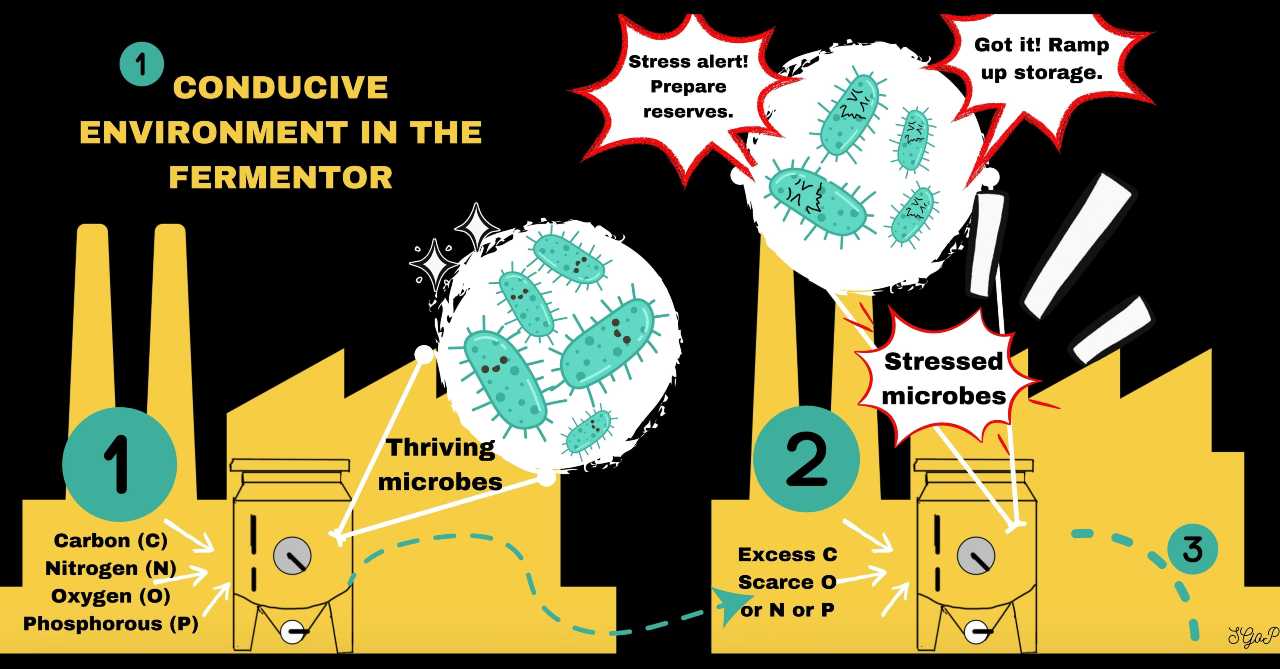
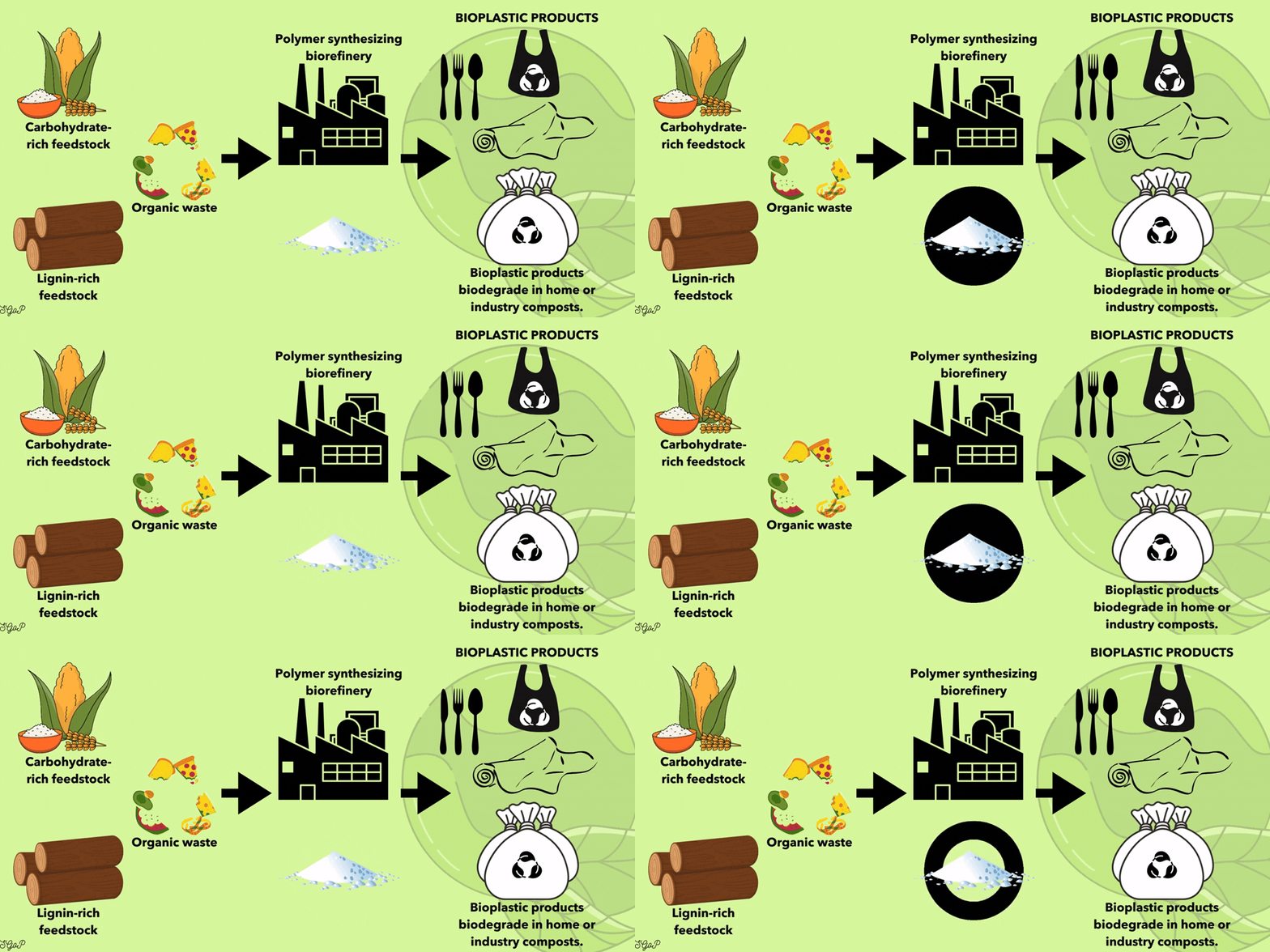
.gif)
.gif)